Most people who ask about dental implant candidacy have already talked themselves out of it before they’ve even seen a dentist. They’ve read a forum post about bone loss, or heard that diabetics can’t get implants, and assumed the door is closed. In reality, the vast majority of people who think they’re not candidates actually are – once a professional looks at the specifics.
What makes someone a good candidate for dental implants?
These are the primary requirements for a successful implant candidate:
- Healthy enough for extraction or oral surgery: If you can have a tooth extracted, you can probably receive an implant.
- Adequate bone density: If you lack sufficient bone in one area, you may be able to have the implant placed in a different area where there’s more bone. Or, procedures can be conducted to rebuild the lacking bone.
- Committed to oral health: You’ll need to commit to good oral hygiene and regular dental visits as long as your implant lasts.
- A non-smoker: Smoking increases the chances of implant failure.
- Generally healthy: Uncontrolled diabetes, kidney disease, cancer, or other serious health conditions can interfere with your body’s ability to heal and bond with the implant. If your health condition is controlled, it usually won’t be a problem.
- Old enough for facial bones to form: Dental implants in young children are a bad idea because our bones move and shift as our faces develop, potentially rejecting the implant.
Bone and gums are the two things that actually matter
Aside from those basic biological requirements, your mouth has to be in good enough shape overall to support the healing you’ll do after implant surgery. That includes an adequate blood supply, which is especially a concern for people with uncontrolled diabetes because the disease affects how blood vessels function. Smoking damages blood vessels as well.
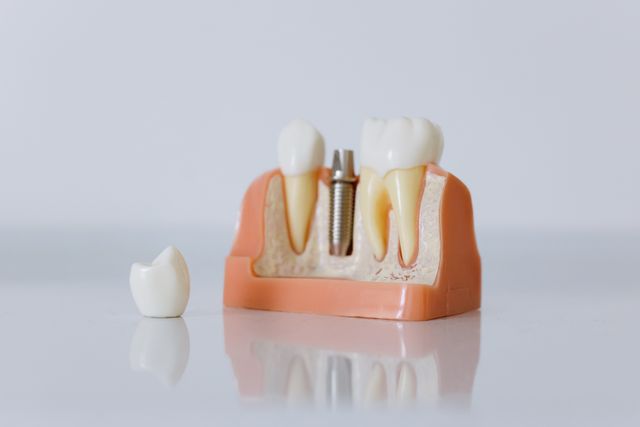
Despite all that, many people can be easily helped to meet the right conditions for a successful implant. If you need extra bone, we can graft some from elsewhere in your body or even grow new bone. Gum disease can be treated. That’s where working with a practice like Finesse Dentistry makes the difference between a guess and an actual answer, since evaluating implant readiness takes both the imaging and the clinical judgment to interpret it.
Health conditions and medications: disqualifying vs. manageable
This is the point where the majority of people are misinformed. When they read that uncontrolled diabetes, smoking, or specific medications can be “risk factors” they think that automatically disqualifies them. In most cases, this is not true.
Uncontrolled diabetes may lead to slower recovery and a higher risk of infection, but well-managed diabetes is not a red flag. Smoking has been associated with significantly higher failure rates of implants, so dentists might require patients to quit or at least reduce smoking before and after the procedure – this is a condition, not a definitive exclusion. Bisphosphonates, commonly used in the treatment of osteoporosis, may have a negative impact on bone regeneration, but your medical history can simply be adjusted to accommodate their use. Autoimmune disorders are generally considered on an individual basis. The key message here is that these conditions are considered manageable, not necessarily disqualifying.
What actually happens at a consultation
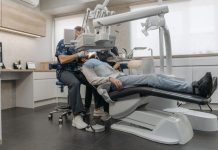
A proper evaluation is not just surfing medical websites. It begins with a thorough review of your medical history – including the medications you take, any chronic conditions you have, and any dental work you’ve had in the past. Then we conduct an oral exam to assess the health of your gums and the condition of any teeth you still have.
The most important step is the cone beam CT scan, a 3D image that allows us to measure your bone density and see exactly where we would place an implant before we start drilling. This is also the point in the process where the dentist starts talking about your expectations and, frankly, your budget – because implants are a multi-step process and not a “take care of it in a single appointment” solution.
Bone density, gum condition, and the appropriate time for treatment are three unknowns going into an online evaluation. The only way to know them is to consult with a dentist who is trained to place implants and accurately read the kind of 3D bone imaging we use to determine whether you’re a candidate. That’s where the difference between guessing and knowing answers exists, and it’s the reason you have to look beyond advertising and do a little bit of research to find the right practice for a cone beam CT scan.
The bone graft and sinus lift myth
Many patients are told “you don’t have enough bone” as a reason not to get an implant. In reality that’s hardly ever a “no.” It’s more of a “not yet.” If an implant is truly what you want, you can get one. Most of the time, the answer to “Can I get dental implants if I’ve had teeth out for a long time?” is, “Yes, but first we’ll need to do some bone grafting.”
When a dental emergency is the starting point
Many discussions about implants look something like this: you lose a tooth, it cracks beyond repair, or it necessitates removal in an emergency extraction. Emergency dentistry isn’t something you can plan for, and it throws the timing question out the window. If you have active infection present at the extraction site or there isn’t adequate bone remaining, expect your dentist to hit the pause button, providing the area with time to properly heal before implant placement. If the site is infection-free and bone volume appears satisfactory on imaging, it’s even possible for the patient to receive their implant on the same day as extraction. In any case, the launch-or-delay decision is a game-day choice based on the current state of your tissue and bone, not a widely applicable benchmark you can look up in advance.
The bottom line on candidacy
Dental implants are not a cure-all (they’re mechanical; they don’t prevent the kinds of bacterial issues that lead to gum disease and other infections), but neither are they rare or doomed to fail. Like any medical procedure, they are right for some and wrong for others. You shouldn’t make that choice based on refrigerator-magnet statistics.
If you’ve lost a tooth or you’re staring down an extraction, don’t let an outdated article make the decision for you. Get the imaging done, hear what your specific bone and gum tissue can support, and let a dentist tell you what your actual options are.