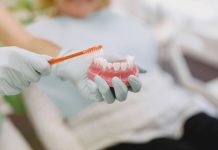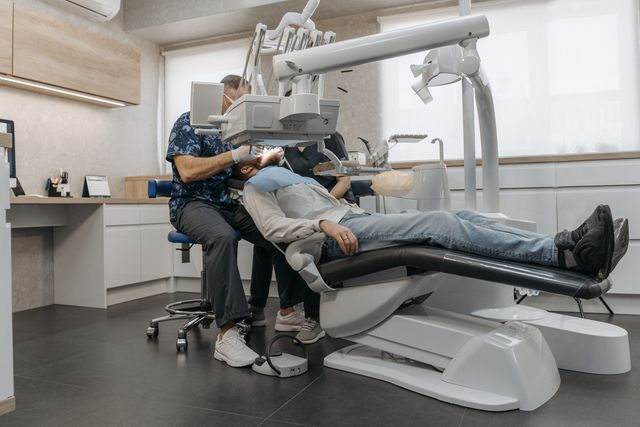
Regular dental check-ups can help identify issues before they become more serious – and more expensive – to fix. It’s far more cost-effective to pay for a bi-annual clean and check-up than an unexpected root canal or filling due to an untreated cavity that has developed into decay. Treat your teeth well, and your bank balance will thank you.
The Math Nobody Runs Until It’s Too Late
Let’s use the idea of car maintenance! An oil change is cheap, takes about twenty minutes, and requires few tools. Skip it for a year or two and you’re not looking at a pricier oil change – you’re potentially looking at a new engine. Teeth function similarly, except the “engine” is your jawbone and the supportive connective tissue that keep your teeth secure in your mouth.
A checkup into your dental health, often bundled with a scaling and polish, is at the very bottom of the cost pyramid. It’s high frequency and predictable. You know more or less what it costs and how often you need it. Compare that to the layers above it: a filling, which costs more than a checkup; a root canal, which costs several times more than a filling; and a crown or implant, which often costs the equivalent of ten years worth of checkups.
The costs don’t just rise, they expand exponentially. A small cavity left unaddressed doesn’t remain small. It spreads towards the nerve, and once it infects the dental pulp, you’re not just getting a small filling. You’re looking at root canal treatment, which is significantly more expensive.
Catching Decay Before It Becomes A Cavity
What most people are unaware of is that dentists are able to identify tooth decay even before it becomes a hole in your tooth. This kind of tooth decay is known as incipient caries – the first stage, where the enamel begins to demineralize, but hasn’t yet broken down to form a cavity. Typically at this point, there’s no pain, no visible dark hole, and nothing you’d notice while brushing your teeth in front of the mirror.
This is where bite-wing radiograph x-rays come in. X-rays taken during a routine check-up can detect decay nestled between teeth or under an old filling, long before it would appear to the naked eye. If the dentist catches it early enough, the solution isn’t a drill – it’s a tube of high-strength fluoride varnish, or in some cases silver diamine fluoride, which gets painted straight onto the spot.
These stop the rot by encouraging remineralisation, essentially the natural process of feeding minerals back into weakened enamel until it hardens up again. No anaesthetic, no drill, no lab-made crown. The whole thing might take five minutes and cost less than a tank of petrol. But leave it for a few more months and that incipient caries will have become a cavity that needs a filling. Leave it long enough and you’ll need a root canal.
Gum Disease Doesn’t Announce Itself
Periodontitis might be the sneakiest condition in all of dentistry. It rarely hurts. Until it’s done something serious.
Inflammation of the gums – gingivitis, the non-serious stuff – is completely reversible and is typically cleared up with a proper clean and maybe a slight adjustment in one’s brushing. But given time and neglect, this can transition to periodontitis, an offensive player that directly attacks the bone and connective tissue that fasten your teeth to your jaw.
The even more frustrating thing about periodontitis is that this bone loss is permanent. You don’t just grow that back with a course of antibiotics. By the time a patient notices their teeth getting loose or their gums receding, they are often already at a point of no return in bone loss. No filling or scaling and polishing session is going to fix that. No, it’s going to be surgical. And surgical options are never the cheap ones.
The enemy of your gums here is calculus. This is the hardened plaque that insinuates itself below the gumline, out of reach of your toothbrush and a vigorous dousing with Listerine. It requires a professional to scrape it off with a tool; ordinary human endeavours will not remove it.
Regular scaling and polishing removes calculus before it has a chance to irritate the gums enough to trigger bone loss. Skip a few years of cleanings and that calculus builds a home for bacteria that slowly eats away at the foundation of your teeth.
Breaking The Emergency-Only Habit
Many individuals do not knowingly opt out of oral healthcare. They simply postpone dental visits until something aches, then spontaneously schedule a visit, and consider that a strategy. Pain, however, comes too late. When a tooth is causing pain, the problem causing that pain specifically has been growing for months if not years. And the pain-causing issue has usually advanced to a point where a quick, cost-effective remedy is not an option.
Replacing this habit requires one decision: proactively seeking out a practice you can put your trust in and doing so before you experience pain. Locating a practice in your area, such as scheduling a check-up with a qualified Hadleigh dentist, is the logical first step in planning regular assessments as opposed to random visits. Once you’ve accumulated a few regular visits, minor issues will be brought to your attention and handled while they’re still minor. You won’t have to pay the usual high cost of emergency dental care nor will you burn through precious time scheduling last-minute visits that can disturb your weekly schedule.
The switch is all about making contact early and not about strenuous effort. You will eventually require professional dental care. The only factor you can determine is whether that happens according to your schedule at the lowest cost to you or on the tooth’s schedule at the maximum cost.
Your Mouth Talks To The Rest Of Your Body
It used to be a big leap to draw connections between oral health and wider health issues. But research has since made the links clearer. Chronic gum inflammation raises systemic inflammatory markers, and those markers are directly linked to conditions like cardiovascular disease and type 2 diabetes. Bacteria from periodontal pockets don’t stay put – they enter the bloodstream and contribute to inflammation elsewhere in the body.
This isn’t just a biology footnote. It has a price tag. A study published in the American Journal of Preventive Medicine found that people with type 2 diabetes or coronary artery disease who received regular periodontal therapy and preventative dental care saw average annual medical cost reductions of 40.2% and 28.6% respectively, largely driven by fewer hospitalizations. That’s not a dental statistic – that’s a medical spending statistic, and it starts with something as simple as keeping up with your checkups.
For anyone managing a chronic condition, treating dental visits as optional is a mistake with knock-on medical costs that go well beyond the dental chair.
The Domino Effect Of One Neglected Tooth
Losing one tooth does not usually affect only that tooth. The loss will most likely cause the neighboring teeth to move toward the empty space. Your bite will be altered. The opposing tooth in the other jaw will over-erupt since there is no contact now. Also, the jawbone in that area will start resorbing due to the lack of stimulation caused by chewing forces.
So, you will have to deal with at least three or four problems instead of one. For instance, you might need orthodontic treatment because of the shifted teeth. A new bite might put stress on the jaw joint. You might need a bone graft before you can get a dental implant as you lack sufficient bone structure to support it. And of course, this all comes with a cost, and it all started from a single tooth that could be saved if treated earlier.
Both dental implants and crowns are there to restore the type of damage we are talking about, and they fulfill their purpose. However, they are among the most expensive treatments in dentistry. The reason is the precise lab work, materials, and surgery needed for the treatment. A regular exam would cost you much less than having a tooth replaced and dealing with the consequences of the missing tooth.
Oral Cancer Screening: The Checkup’s Quiet Lifesaver
Hidden in every step-by-step dental care check-up is an examination for oral cancer. It’s fast, just a visual and physical check of the tongue, lips, and throat. And lots of clients rarely recognize it. But it’s likely the most important five minutes of the whole appointment.
Oral cancers found early survive five years at far higher rates than those found late. Found late, treatment generally means aggressive surgery, radiation, and sometimes disfigurement that reconstructive surgery can only partly relieve. Found early, treatment is simpler, and results are much better. Dentists also are among the first care providers to find early signs, mainly because they look in your mouth on a regular basis that most people never consider copying anywhere.
What A Good Dentist Actually Does With Your Data
A dental checkup goes beyond physical examination. When you visit a dentist regularly, they start to understand your specific conditions: how much saliva your mouth produces, your eating habits, how you brush your teeth, and so forth. This familiarization with your habits and conditions allows the dentist to give you tailored advice that is much more valuable than generic advice you read on a toothpaste box.
For instance, a person with low saliva flow will get different advice than a person with a diet rich in acidic beverages. An aggressive brusher who is wearing down their enamel will get different advice than a person who misses the same spot every time they brush. However, your dentist cannot detect these behaviors in a single visit. They will recognize patterns in behavior and health outcome over the course of several visits.
The more often you go, the more advice you’ll get that is actually tailored to your life, your habits, and your body.
The Bottom Line On The Math
Taking care of your teeth is not a matter of beauty or self-control. It is a financial decision that pays off: you will have to pay less for regular check-ups, you will avoid emergency expenses, you will decrease your overall health issues, and you will also reduce the risk of losing your teeth, which will imply additional years and costs in implants or dentures.
If you skip the maintenance of your car engine long enough, you will have to buy a new one. The same goes for your teeth. The only difference is that your car engine is loud when it starts to break. Your teeth are not!