Key Takeaways
- Choose walking equipment around your dog’s body, behavior, health, and usual environment.
- A well-fitting harness may distribute leash pressure more evenly than a collar, but it does not teach loose-leash walking on its own.
- Leash type, route conditions, visibility, weather, and equipment condition all influence safety.
- Reward-based training and a brief pre-walk check can make outings calmer and more reliable.
Why A Walking Routine Needs More Than A Leash
A daily walk can give a dog opportunities for movement, sniffing, training, and exposure to everyday sights and sounds. Yet the most useful routine is not defined by a single gear choice or a fixed distance. It should reflect the individual dog’s comfort, fitness, confidence, and surroundings.
For dogs that pull, get startled, or need a more secure walking setup, a no pull dog harness can be an option to consider alongside patient training and a proper fit. The goal is not simply to keep a dog attached to the handler. It is to support controlled movement without causing unnecessary discomfort.
Walks can become difficult when traffic is loud, sidewalks are crowded, temperatures are extreme, or a dog is worried by other animals. A sudden reluctance to walk, limping, coughing, unusual fatigue, or a major change in behavior should not be dismissed as stubbornness. These signs can justify a conversation with a veterinarian.
Start With The Dog’s Needs
Two dogs with the same weight may need very different setups. Chest shape, coat thickness, pulling force, mobility, and escape behavior matter more than a number on a product label.
- Puppies: Need adjustable gear that allows normal movement as they grow, plus short, positive practice sessions.
- Senior dogs: May benefit from gentler routes and veterinary guidance if joint stiffness, weakness, or pain affects activity.
- Flat-faced breeds: Need special attention to breathing comfort and heat exposure.
- Strong pullers: Need durable hardware, a secure fit, and training that builds calm leash skills.
- Nervous or escape-prone dogs: May need a carefully fitted, secure system and quieter routes while confidence develops.
Choosing Between A Collar And A Harness
A flat collar can work well for identification and for calm dogs that do not maintain pressure on the leash. Many handlers prefer to attach the leash to a body harness when a dog pulls, has neck-related concerns, or needs more evenly distributed contact across the torso. Keep identification tags up to date, even if the leash attaches to a harness.
Harnesses are management tools, not automatic solutions for pulling. Avoid using any tightening or correction-based equipment without qualified guidance, particularly if a dog coughs, panics, or appears uncomfortable. Veterinary dog-walking safety guidance also emphasizes sturdy equipment, leash control, identification, and planning exercise around the individual dog.
How To Check Harness Fit
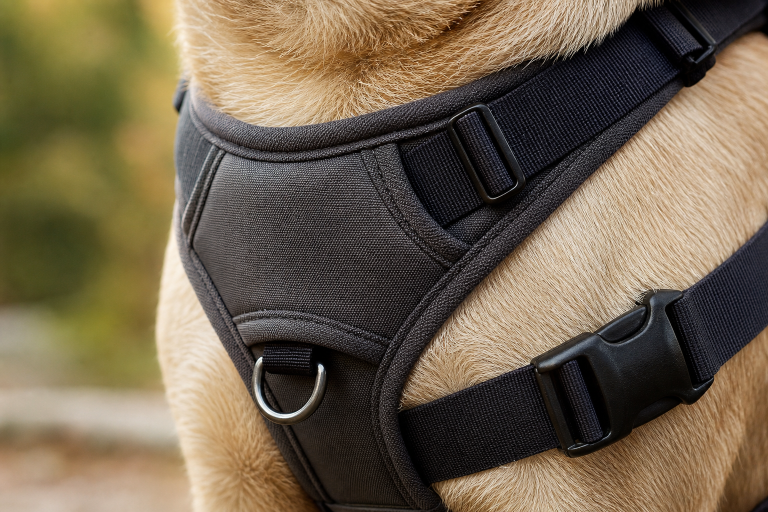
- Measure the dog using the manufacturer’s instructions instead of selecting by weight alone.
- Lay the harness flat so the straps do not twist or bunch.
- Make sure no strap presses into the throat, armpits, or leg joints.
- Gently test whether the dog can back out of the harness.
- Watch the dog walk, turn, sit, and lie down while wearing it.
- Stop and reassess if you notice chafing, hair loss, coughing, altered movement, or repeated attempts to remove the gear.
The common two-finger check can be a useful starting point, but it is not a universal rule. The right amount of space varies with the harness design, the dog’s coat, and body shape. Secure should not mean restrictive.
Read Also: 6 Common Questions About Natural Dog Chews Answered
Picking The Right Leash
Match Control To The Setting
- Standard fixed leashes: Often provide dependable control near roads, bicycles, crowds, and unfamiliar dogs.
- Long lines: Can be useful for supervised training and sniffing in open, low-risk areas.
- Retractable leashes: Can create extra distance quickly and may be less practical where immediate control is needed.
- Hands-free options: Can be convenient for appropriate dogs, but should not be used where a sudden lunge could pull the handler off balance.
Check the clip, stitching, leash material, width, and handle before use. Do not wrap a leash around your hand, wrist, or waist when a dog could lunge suddenly.
Build A Simple Pre-Walk Safety Check
Make this a 30-second habit before leaving the house:
- Inspect buckles, clips, seams, and stitching for cracks, fraying, chewing, or loose hardware.
- Confirm that tags are readable and securely attached.
- Check that the dog seems comfortable and ready to go.
- Bring waste bags, water, and a portable bowl when the route or weather calls for them.
- Use reflective details or a light for low-light walks.
Match The Setup To The Route
Neighborhood walks usually call for predictable control, safe crossings, and awareness of vehicles. At parks, allow reasonable sniffing room while avoiding hazards. On trails, consider wildlife, rough terrain, steep edges, standing water, and loose dogs. In crowded areas, shorten the distance between you and your dog without keeping the leash constantly tight. When traveling, use secure equipment and check local leash requirements before heading out.
Improve Walks With Reward-Based Training
Gear manages a dog’s movement. Training teaches the dog what to do instead. Reward a check-in, a calm turn toward you, or a loose leash with praise, food, access to sniffing, or another reward the dog values. Simple cues such as “wait,” “this way,” and “leave it” can be especially useful when there are distractions.
If a dog becomes overwhelmed, choose quieter routes and shorter outings rather than pushing through escalating fear or frustration. Harsh corrections can worsen anxiety or reactivity for some dogs. Progress often comes in small, repeatable steps, especially for rescue dogs and nervous walkers.
Plan For Weather And Visibility
Heat, humidity, hot pavement, rain, ice, salt, and strong wind can change what a safe walk looks like. Walk during cooler hours when conditions are hot, offer water on longer outings, and shorten the route when weather becomes challenging. The outdoor hazards dogs may encounter on walks are also a useful reminder to prioritize hydration, identification, and weather awareness.
Use bright or reflective materials and lights so drivers, cyclists, and other pedestrians can see both the dog and the handler. After walks on hot, rough, icy, or treated surfaces, inspect paws for irritation, cuts, or debris.
Common Gear Mistakes To Avoid
- Buying equipment by weight alone rather than taking measurements.
- Leaving a harness loose enough for a dog to reverse out of it.
- Using worn clips, cracked buckles, or frayed leash material.
- Assuming a “no-pull” label replaces consistent training.
- Use a long leash around traffic or in crowded spaces.
- Ignoring signs of rubbing, coughing, discomfort, or unusual resistance.
When To Ask A Professional For Help
Contact a veterinarian if walks bring on coughing, limping, weakness, breathing trouble, pain, or unusual fatigue. Seek a qualified, reward-based trainer for persistent pulling, lunging, fear, or escape behavior. Stop using any setup that causes pain, choking, repeated escapes, or major distress.
Conclusion
Safer dog walks begin with equipment that fits, a leash suited to the route, updated identification, and a quick check before every outing. Combine those basics with calm, reward-based training, and everyday walks can become more comfortable, secure, and enjoyable for both dog and handler.