Key Takeaways
- Choose a door system that fits the home, local weather, and frequency of use.
- Look at the slab, frame, threshold, glass, seals, and hardware together.
- Compare fiberglass, steel, wood, and composite options in terms of upkeep and appearance.
- Measure carefully and address frame damage before ordering a replacement.
- Plan for simple seasonal maintenance to protect comfort and performance.
In Mechanicsburg, Pennsylvania, an exterior door must withstand changing seasons, regular use, and the everyday need for a secure, welcoming entrance. Whether a front entry feels drafty or a side door has begun to stick, homeowners considering custom doors can make a better choice by looking beyond color and panel design.
The right replacement door should suit the opening, the household routine, and the level of maintenance the owner is prepared to handle. A thoughtful comparison of materials, glass, weather sealing, hardware, and installation can help prevent costly surprises after the work begins.
1. Start With the Problems the Current Door Creates
A door does not need a visible hole to create a problem. Check for cold or warm air near the edges, daylight around the jamb, loose hinges, a latch that does not align, peeling finish, damaged weatherstripping, or moisture stains near the sill. Soft wood, recurring sticking, and a threshold that has pulled away from the floor can indicate issues that warrant attention before a new door is selected.
2. Set Clear Goals Before Comparing Styles
Write down what the replacement needs to accomplish. A busy front entrance may call for stronger hardware and a durable finish, while a shaded side entry may place more value on low maintenance. Common goals include improving comfort, adding daylight, increasing privacy, simplifying cleaning, improving access, or better matching the architecture of a Mechanicsburg home.
3. Compare the Main Exterior Door Materials
Fiberglass
Fiberglass doors are often selected for their moisture resistance and wide range of painted, stained, and wood-look finishes. Many have insulated cores and can be a practical choice for homeowners who want a lower-maintenance entry.
Steel, Wood, and Composite
Steel can provide a solid feel and is commonly used for secure exterior entries, but scratches or damaged coatings should be repaired promptly. Wood offers natural character and can be refinished, though it typically needs more regular finish care. Composite systems vary by manufacturer, so compare the construction, finish, warranty, and frame material rather than relying on the material name alone.
4. Look Beyond the Door Slab
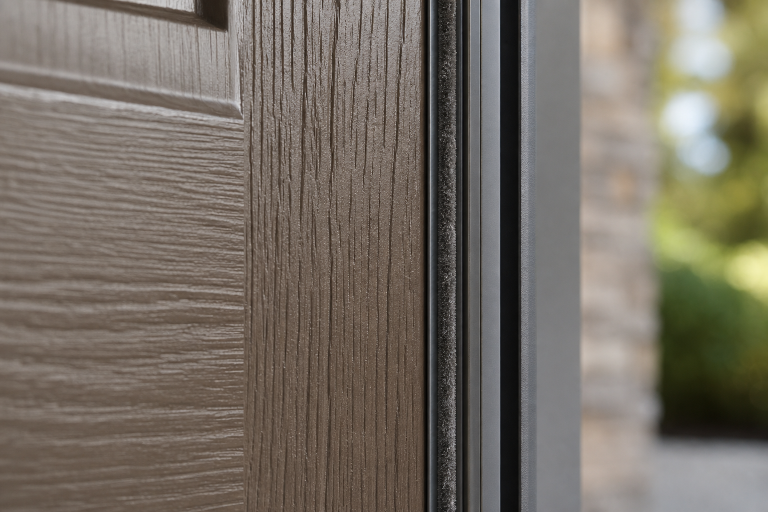
An exterior door performs as a system. The frame, hinges, threshold, sweep, weatherstripping, lockset, glass, and wall connection all affect how the entry closes and seals. Replacing only the slab may not resolve a warped jamb, water-damaged sill, or gap around the frame.
- Ask about the insulated core and frame construction.
- Check whether the threshold is durable and adjustable.
- Look for continuous weatherstripping and a properly fitted door sweep.
- Consider reinforced strike plates, sturdy hinges, and appropriate safety glass.
5. Check Energy Ratings and Glass Options
Product labels make it easier to compare doors with similar appearances. U-factor, solar heat gain coefficient, air leakage, and visible transmittance describe different aspects of thermal and glass performance. In general, a lower U-factor indicates greater resistance to heat flow. For doors with glazing, compare the whole product rating, not only the glass package.
6. Choose the Right Amount of Glass
Glass can brighten a dark foyer, but more glazing may also affect privacy, cleaning, and comfort near the door. A solid door, half-lite design, full-lite panel, or sidelites can all be appropriate depending on the entry. Consider the direction the door faces, nearby street visibility, available shade, and whether decorative, obscured, tempered, or laminated glass would fit the household’s needs.
7. Match Security Features to the Entry
Security depends on more than a deadbolt. A well-fitted frame, substantial strike plate, correctly installed fasteners, dependable hinges, and secure glazing all matter. Select hardware that every regular user can operate comfortably. For an entry used by children, older adults, or guests, ease of locking and unlocking should be a factor in the decision.
8. Measure Before Ordering
Measure the opening width at the top, middle, and bottom, then measure height on both sides and at the center. Record the jamb depth, door swing, hinge side, and condition of the sill and surrounding trim. Take photographs from indoors and outdoors. Different measurements can indicate an out-of-square opening, so avoid ordering a custom unit based on a single measurement.
9. Plan for Installation and Weather Sealing
Even a well-built door can disappoint if the opening is not prepared and sealed correctly. The frame should be level, plumb, and square, while the door should latch without rubbing. Properly lapped flashing helps direct water away from the wall, and air sealing around door rough openings helps limit uncontrolled airflow that trim alone cannot stop.
- Confirm how hidden rot or moisture damage will be handled.
- Verify that the threshold is supported and drains outward.
- Test the latch, lock, hinges, sweep, and weatherstripping before the installer leaves.
10. Build a Simple Maintenance Schedule
Monthly, check the closing action and tighten obviously loose hardware. Each season, inspect caulk, seals, glass, and the threshold for debris or damage. Once a year, clean moving hardware as directed by its manufacturer and touch up damaged paint or finish. Prompt care is especially useful after a hard winter or a wet stretch of weather.
11. Compare Cost, Lifespan, and Daily Value
Compare each option by purchase price, installation cost, expected upkeep, energy features, security hardware, warranty terms, and appearance. A basic door can be appropriate for a lightly used utility entrance. A main entry that opens many times a day may justify a more durable system with stronger hardware, better sealing, or easier-care finishes.
12. Questions to Ask Before Work Begins
- Will the existing frame be reused, repaired, or replaced?
- How will concealed moisture damage be identified and addressed?
- What ratings apply to the selected door configuration?
- How will the opening be flashed and sealed against air and water?
- Which materials, labor, finish, and hardware are covered by warranty?
- What maintenance should be expected after installation?
Conclusion
The best exterior replacement door for a Mechanicsburg home is not necessarily the most elaborate option. It is one that fits the opening, provides comfort, offers dependable security, and meets the home’s daily demands. Careful measurements, meaningful performance information, sound installation, and routine maintenance can turn a replacement door into a lasting improvement.