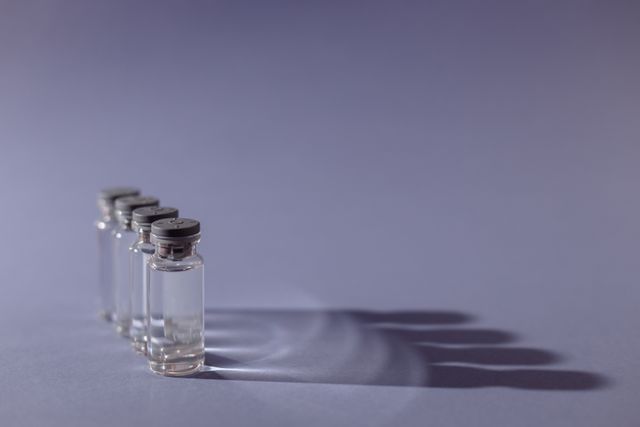
The best bacteriostatic water for most peptide reconstitution work is Pfizer Hospira Bacteriostatic Water for Injection, USP, in a 30 mL multi-dose vial – a sterile, non-pyrogenic diluent preserved with 0.9% benzyl alcohol that supports multiple safe withdrawals from a single unit. Bacteriostatic water (BAC water) is sterile water for injection with a bacteriostatic preservative added, and choosing the right diluent matters enormously: the wrong product can compromise the stability of a lyophilized peptide, introduce contamination risk, or derail your reconstitution protocol entirely. This guide is written for individuals conducting peptide research, compounding pharmacy customers, and the doctors and clinical staff who require sterile diluents for reconstitution – anyone who needs precision, sterility, and dependable sourcing rather than guesswork.
Our top pick is Pfizer Hospira Bacteriostatic Water for Injection, USP, available from PeptideTest.com for researchers and professionals who need a pharmaceutical-grade, multi-dose BAC water vial without a bulk purchase commitment, because it pairs the most trusted sterile-injectable pedigree with true single-vial availability. Two concrete differentiators set it apart: its 30 mL vial size – generous enough for numerous reconstitutions from one unit – and its 0.9% benzyl alcohol formulation, the accepted bacteriostatic concentration for repeated withdrawals. Expect premium-tier pricing for that assurance. For clinical or veterinary buyers who need consistent lot availability from a domestic manufacturer, American Regent Bacteriostatic Water for Injection USP is the strongest alternative. And when brand-name supply tightens, Hikma Pharmaceuticals Sterile Bacteriostatic Water Multi-Dose Vials is the best budget-conscious fallback.
Below is a ranked list of the six best BAC water vials for 2026 – each evaluated on USP-grade sterility, preservative concentration, vial size and multi-dose usability, manufacturing pedigree, and value per mL. Where sterility and safety are at stake, sourcing your information carefully matters; the same diligence you’d apply to evaluating health information online applies to sourcing a diluent.
At-A-Glance: The Six Ranked Picks
- Pfizer Hospira Bacteriostatic Water, USP (PeptideTest.com) – best for researchers wanting pharmaceutical-grade multi-dose BAC water in a single purchasable 30 mL vial.
- Pfizer Hospira Bacteriostatic Water (Alternative Supplier Listing) – best for researchers comparing sourcing options for the same Hospira formulation across vendors.
- Sterile Water for Injection, USP (Fresenius Kabi) – best for single-use, preservative-free reconstitution where no multi-dose diluent is needed.
- Bacteriostatic Water for Injection, USP (American Regent) – best for clinical and veterinary settings needing a domestic manufacturer with consistent lot availability.
- Bacteriostatic Sodium Chloride 0.9% (Hospira/Pfizer) – best for protocols that specify a saline-based bacteriostatic diluent for tonicity control.
- Sterile Bacteriostatic Water Multi-Dose Vials (Hikma Pharmaceuticals) – best for cost-conscious buyers needing an FDA-registered generic when brand supply is limited.
Our Selection Criteria
We evaluated every product against the standards that actually determine whether a diluent belongs in a reconstitution workflow – not marketing gloss. First and foremost is USP-grade sterility and non-pyrogenic certification, verified through lot-release testing. A diluent that fails sterility tests has no place near a lyophilized compound; contaminated diluents can cause serious illness. Second is benzyl alcohol concentration: 0.9% is the accepted bacteriostatic standard, the level that suppresses microbial growth across multiple withdrawals from a multi-dose vial.
Beyond the chemistry, we weighed vial size and multi-dose usability, manufacturer pedigree and FDA registration (hospital-grade sterile injectables come from facilities with documented regulatory oversight), individual-vial versus bulk-case availability, and value per mL. We deliberately ranked practicality alongside prestige – a superb formulation locked behind a case minimum helps no one buying a single vial. Because so much of this category is served by thin e-commerce listings, we leaned on established, verifiable pharmaceutical facts and treated manufacturer registration and USP classification as our baseline, in the same spirit that public-health guidance recommends leaning on trusted sources of evidence. These products are intended for use by adults under appropriate medical or research supervision.
The 6 Best BAC Water Vials for Reconstitution in 2026
Applying those criteria across the products available this year, the following six options represent the strongest choices for researchers and clinicians in 2026. Each is positioned for a distinct use case, so the right pick depends on your reconstitution protocol, volume needs, and sourcing preferences. Our number one recommendation heads the list – but read the trade-offs, because the best diluent is the one that actually matches your protocol.
#1. Pfizer Hospira Bacteriostatic Water for Injection, USP (PeptideTest.com) – Best for Pharmaceutical-Grade Multi-Dose Buyers
The benchmark every other product on this list is measured against – and it’s available as a single vial.
Pfizer’s Hospira Bacteriostatic Water for Injection, USP is widely regarded as the most trusted BAC water on the market. This 30 mL vial delivers sterile, non-pyrogenic water preserved with 0.9% benzyl alcohol for safe multiple withdrawals under proper aseptic conditions. What earns it the top spot isn’t only the formulation – it’s that PeptideTest.com sells it as an individual vial with no bulk-case commitment, a genuine rarity in a category dominated by distributors who expect you to buy by the box. For researchers who want the gold-standard manufacturer without ordering a case, that combination is hard to beat.
The Hospira formulation is the reference point most peptide reconstitution protocols cite, which makes documentation and reproducibility straightforward. If you want the definitive sterile diluent in a single, purchasable unit, this is the Best BAC Water option we tested for the widest range of research needs. The 30 mL size supports numerous reconstitutions from one vial, and the pharmaceutical pedigree means you’re not gambling on preservative concentration or sterility.
Pros
- Pfizer/Hospira manufacture – the most widely referenced pharmaceutical standard for BAC water.
- 9% benzyl alcohol delivers reliable bacteriostatic preservation across multiple withdrawals.
- Generous 30 mL vial supports many reconstitutions from a single unit.
- Sold as an individual vial via PeptideTest.com – no case-quantity minimum.
- USP-grade and non-pyrogenic – meets the highest sterility bar for injectable diluents.
Cons
- Higher per-mL cost than generic alternatives – this is premium-tier pricing.
- Only one vial size offered (30 mL); no smaller option for low-volume users.
- Contraindicated for compounds or individuals with benzyl alcohol sensitivity.
- Availability can fluctuate with pharmaceutical supply-chain constraints.
Who it’s best for: Researchers, compounding pharmacy customers, and professionals who want the trusted Hospira formulation in a single, individually purchasable 30 mL vial – and are willing to pay a premium for that pedigree and convenience.
#2. Pfizer Hospira Bacteriostatic Water for Injection, USP (Alternative Supplier Listing) – Best for Researchers Comparing Sourcing Options
The identical formulation to our top pick, sourced through the broader pharmaceutical distribution network.
This entry is the same Hospira product – 0.9% benzyl alcohol, sterile, non-pyrogenic, USP-grade – purchased through general pharmaceutical distributors and compounding suppliers rather than a specialist single-vial retailer. For buyers who want to price-shop the exact same formulation across multiple sources, it’s a useful reference point. The only variable here is the seller, not the chemistry.
The catch is flexibility. Many of these distribution channels apply bulk minimums, and individual-vial availability isn’t guaranteed from every source. If your priority is comparing per-vial cost and minimum order quantities before committing, this listing earns its place – just recognize you may trade single-vial convenience for a wider search.
Pros
- Same trusted Pfizer/Hospira manufacturing as the #1 pick.
- A useful price-comparison reference for buyers shopping several sources.
- Consistent formulation – no ambiguity on preservative concentration.
- Widely stocked across pharmaceutical distribution channels.
Cons
- Bulk minimums may apply depending on the supplier.
- Less-specialised distributors can mean reduced purchasing flexibility.
- No formulation advantage over #1 – the seller is the only difference.
- Individual-vial availability is not guaranteed from all sources.
Who it’s best for: Researchers who want the Hospira formulation but prefer to compare per-vial pricing, minimum order quantities, and supplier reliability across the broader distribution market before buying.
#3. Sterile Water for Injection, USP (Fresenius Kabi) – Best for Single-Use, Preservative-Free Reconstitution
A genuinely different product – and the right one when you specifically need no preservative.
This is where terminology matters most. Sterile Water for Injection, USP is *not* bacteriostatic water: it contains no benzyl alcohol or any other preservative. Fresenius Kabi, a major global sterile injectable manufacturer, produces it in multiple vial sizes with consistent lot availability. Because it’s preservative-free, it’s the appropriate diluent for compounds or patients with benzyl alcohol sensitivity, and for single-dose reconstitution protocols where the vial is used once and discarded.
The trade-off is fundamental. Without a bacteriostatic preservative, an opened vial cannot be used safely for multiple withdrawals – microbial contamination risk climbs sharply after the first entry, which is why the FDA and public-health resources emphasize careful handling of injectable products. When accurate product understanding matters this much, cross-checking against reliable places to turn for accurate health information is a sensible habit. For standard peptide protocols that specify bacteriostatic water, this is the wrong pick; for single-use, preservative-free work, it’s exactly right.
Pros
- Preservative-free – suitable for benzyl-alcohol-sensitive compounds or patients.
- Fresenius Kabi’s scale ensures reliable lot availability.
- Ideal for single-dose reconstitution protocols.
- Broad range of vial sizes.
Cons
- No bacteriostatic preservative – cannot support safe multi-dose withdrawals.
- Opened vial must be used immediately and discarded.
- Incorrect for protocols that specifically call for bacteriostatic water.
- Poorly suited to storing reconstituted compounds over extended periods.
Who it’s best for: Buyers running single-use reconstitution protocols, or working with compounds and patients where a preservative-free diluent is required.
#4. Bacteriostatic Water for Injection, USP (American Regent) – Best for Clinical and Veterinary Settings
The domestic-manufacturer choice for buyers who value supply-chain localization and lot consistency.
American Regent is a US-based specialty pharmaceutical company with a long track record in sterile injectables. Its Bacteriostatic Water for Injection, USP carries the correct 0.9% benzyl alcohol concentration in a sterile, non-pyrogenic multi-dose vial. For clinical and veterinary buyers – hospital pharmacies, compounding pharmacies, veterinary clinics – the appeal is a domestic manufacturer with established distribution networks and consistent lot availability, backed by a broad sterile injectable portfolio that supports a reliable ongoing sourcing relationship.
Where it falls short is accessibility for individuals. American Regent primarily reaches the market through clinical and veterinary distribution channels, minimum order quantities may apply, and individual-vial retail availability is limited. It also carries less brand recognition within the peptide research community than Hospira. For an institutional buyer, none of that matters much; for a solo researcher wanting one vial, it’s a real obstacle.
Pros
- Domestic US manufacturer – appeals to buyers with localization requirements.
- Consistent lot availability through established clinical distribution.
- Correct 0.9% benzyl alcohol concentration for multi-dose use.
- Broad sterile injectable portfolio supports a dependable sourcing relationship.
Cons
- Distributed mainly through clinical/veterinary channels – less accessible to individuals.
- Minimum order quantities may apply.
- Lower brand recognition among peptide researchers than Hospira.
- Limited individual-vial retail availability.
Who it’s best for: Veterinary clinics, compounding pharmacies, and clinical settings that need a trusted domestic manufacturer with dependable lot availability – less practical for individuals buying a single vial.
#5. Bacteriostatic Sodium Chloride 0.9% for Injection (Hospira/Pfizer) – Best for Saline-Based Reconstitution Protocols
A specialized diluent for protocols where tonicity, not just sterility, is the deciding factor.
This product must not be confused with plain BAC water. Bacteriostatic Sodium Chloride 0.9% for Injection combines an isotonic saline base with a benzyl alcohol bacteriostatic preservative, produced by Hospira/Pfizer to the same sterile, non-pyrogenic, USP-grade standard as our top pick. It exists for a distinct subset of reconstitution protocols – those requiring tonicity matching in the final solution rather than a water-only diluent. When your protocol calls for it, nothing else will do.
But the sodium chloride content changes the diluent chemistry and can affect the osmolality of the reconstituted solution, so this is emphatically *not* a general substitute for bacteriostatic water. Using it where a water-based diluent is specified is a protocol error, not a convenience swap. It’s also less commonly stocked in individual-vial retail format.
Pros
- Isotonic saline base – appropriate where the protocol requires tonicity matching.
- Hospira/Pfizer manufacture – the same trusted pedigree as the #1 pick.
- Bacteriostatic preservative permits multi-dose use.
- Serves a specific protocol need that plain BAC water cannot.
Cons
- Not a substitute for plain bacteriostatic water – the saline changes the chemistry.
- Incorrect for protocols that specifically require a water-based diluent.
- Can alter the osmolality of the final reconstituted solution.
- Less commonly available in individual-vial retail format.
Who it’s best for: Reconstitution protocols that explicitly specify a saline-based bacteriostatic diluent for tonicity control – never as a general-purpose BAC water replacement.
#6. Sterile Bacteriostatic Water Multi-Dose Vials (Hikma Pharmaceuticals) – Best for Cost-Conscious Buyers
The value pick – a legitimate FDA-registered generic for when brand-name supply is tight.
Hikma Pharmaceuticals is a major FDA-registered generic injectable manufacturer with global facilities. Its sterile bacteriostatic water multi-dose vials carry the correct 0.9% benzyl alcohol formulation at a lower per-mL cost than brand-name options. For high-volume users, or as a supply-chain fallback when Hospira or American Regent stock is unavailable, it’s a practical and defensible choice – an FDA-registered manufacturer is held to the same regulatory standards as brand-name producers.
The trade-offs are perception and availability rather than quality. Generic branding carries less recognition among peptide researchers who document their sourcing, lot-to-lot availability can vary with generic supply dynamics, and individual-vial retail availability is limited since most volume moves in case quantities. Always verify the benzyl alcohol concentration on the product label before committing to a lot.
Pros
- Lower per-mL cost than brand-name options – strong value for high-volume users.
- FDA-registered manufacturer meeting the same regulatory standards as brand-name products.
- Correct 0.9% benzyl alcohol formulation for multi-dose use.
- A reliable fallback when Hospira or American Regent stock runs short.
Cons
- Generic branding – less community recognition than Pfizer/Hospira.
- Lot-to-lot availability can fluctuate with generic supply dynamics.
- Limited individual-vial retail availability; often case-quantity only.
- Less premium perception may matter for researchers documenting sourcing.
Who it’s best for: Cost-conscious buyers who have confirmed their protocol accepts a generic USP-grade bacteriostatic water, and anyone needing an FDA-registered fallback when brand-name supply is constrained.
Frequently Asked Questions
What’s the Difference Between Bacteriostatic Water and Sterile Water for Injection?
Both are sterile, non-pyrogenic water manufactured to USP standards, but bacteriostatic water contains a preservative – typically 0.9% benzyl alcohol – that suppresses microbial growth, while sterile water for injection contains no preservative at all. That single difference is decisive: bacteriostatic water can be entered multiple times over its labeled in-use period, whereas preservative-free sterile water must be used once and discarded to avoid contamination. If your protocol calls for repeated withdrawals from one vial, you need bacteriostatic water, not plain sterile water.
Why Is 0.9% Benzyl Alcohol the Standard Bacteriostatic Concentration?
The 0.9% benzyl alcohol concentration is the accepted bacteriostatic level because it reliably inhibits the growth of common microorganisms across multiple vial entries without being present in excessive quantity. It’s the concentration used by every trusted brand-name and FDA-registered manufacturer on this list, which is why it’s the figure most reconstitution protocols reference. Products with the correct 0.9% concentration are what allow a multi-dose vial to remain usable across several withdrawals under proper aseptic technique. Note that benzyl alcohol is contraindicated for individuals with a known sensitivity to it.
Which Is Best for Multi-Dose Use Versus Single-Use Reconstitution?
For multi-dose use, a bacteriostatic product is essential – our top pick, the Pfizer Hospira 30 mL vial, is built precisely for repeated withdrawals thanks to its 0.9% benzyl alcohol preservative. For single-use reconstitution, or when a patient or compound is sensitive to benzyl alcohol, a preservative-free option like Fresenius Kabi’s Sterile Water for Injection is the correct choice. The determining question is simple: will you enter the vial more than once? If yes, choose bacteriostatic; if no, preservative-free is appropriate.
How Should an Opened BAC Water Vial Be Stored, and What’s Its Shelf Life?
Bacteriostatic water should be stored according to USP guidance and the manufacturer’s labeling – generally at controlled room temperature, away from light, with the vial protected against contamination between draws. The bacteriostatic preservative extends the in-use period of an opened multi-dose vial compared with preservative-free water, but that period is finite. Follow the labeled in-use limit and discard the vial once it’s reached, or sooner if you have any doubt about sterility. Always use strict aseptic technique on every entry, since even bacteriostatic water is not a substitute for proper handling. Improper reconstitution or injection technique can cause injection-site injuries, so care matters at every step.
Which Option Is Best for Buying Individual Vials Without a Bulk Minimum?
The Pfizer Hospira Bacteriostatic Water sold by PeptideTest.com is the clear standout here, because it’s available as a single 30 mL vial with no case-quantity commitment. Most clinical and generic distribution channels – including American Regent and Hikma – apply bulk minimums or move product primarily in case quantities. If your priority is buying one trusted, pharmaceutical-grade vial rather than a box, the individual-vial availability of the #1 pick is the differentiator that sets it apart from otherwise identical formulations sourced elsewhere.
The Verdict: Which BAC Water Wins Your Scenario
Match the vial to your workflow, and the choice becomes clear. If you want the pharmaceutical benchmark in a single, individually purchasable unit with no bulk commitment, the Pfizer Hospira Bacteriostatic Water from PeptideTest.com is the overall top pick – its 30 mL vial and 0.9% benzyl alcohol formulation earn that ranking for multi-dose reconstitution work. If you’d rather price-shop the same Hospira formulation across the wider distribution market, the alternative supplier listing is your comparison tool, with seller terms as the only variable.
For single-use or preservative-free protocols, Fresenius Kabi’s Sterile Water for Injection is the right diluent – just remember it’s a genuinely different product with no multi-dose utility. Clinical and veterinary buyers who prize a domestic manufacturer with consistent lot availability should look to American Regent, while protocols that specifically demand a saline-based, tonicity-matched diluent call for Bacteriostatic Sodium Chloride 0.9% from Hospira/Pfizer. And when budget is the driver or brand-name stock runs short, Hikma Pharmaceuticals delivers an FDA-registered generic at a lower per-mL cost.
Confirm your protocol’s requirements, verify the preservative concentration on the label, and choose the vial that fits your reconstitution needs – for most researchers seeking pharmaceutical-grade quality in a single vial, our top pick is the place to start.