There’s nothing quite like the relief of stepping into a cool home on a hot day. But what happens when that comfort suddenly disappears because your AC fan stops spinning? A non-spinning AC fan is more than just an inconvenience. It signals a critical issue that can lead to system damage and expensive repairs.
As experienced professionals in HVAC, we understand the frustration and concern this problem brings. In this comprehensive guide, we will explore the most common reasons your AC fan might cease operation. We’ll provide safe, actionable troubleshooting steps you can take at home to identify the issue. We will also help you understand when call a professional HVAC technician for expert diagnosis and repair.
For homeowners seeking reliable service, understanding when to call for Trusted HVAC fan motor repair is crucial. Our goal is to empower you with the knowledge to keep your home cool and your AC system running efficiently, well into April 2026 and beyond.
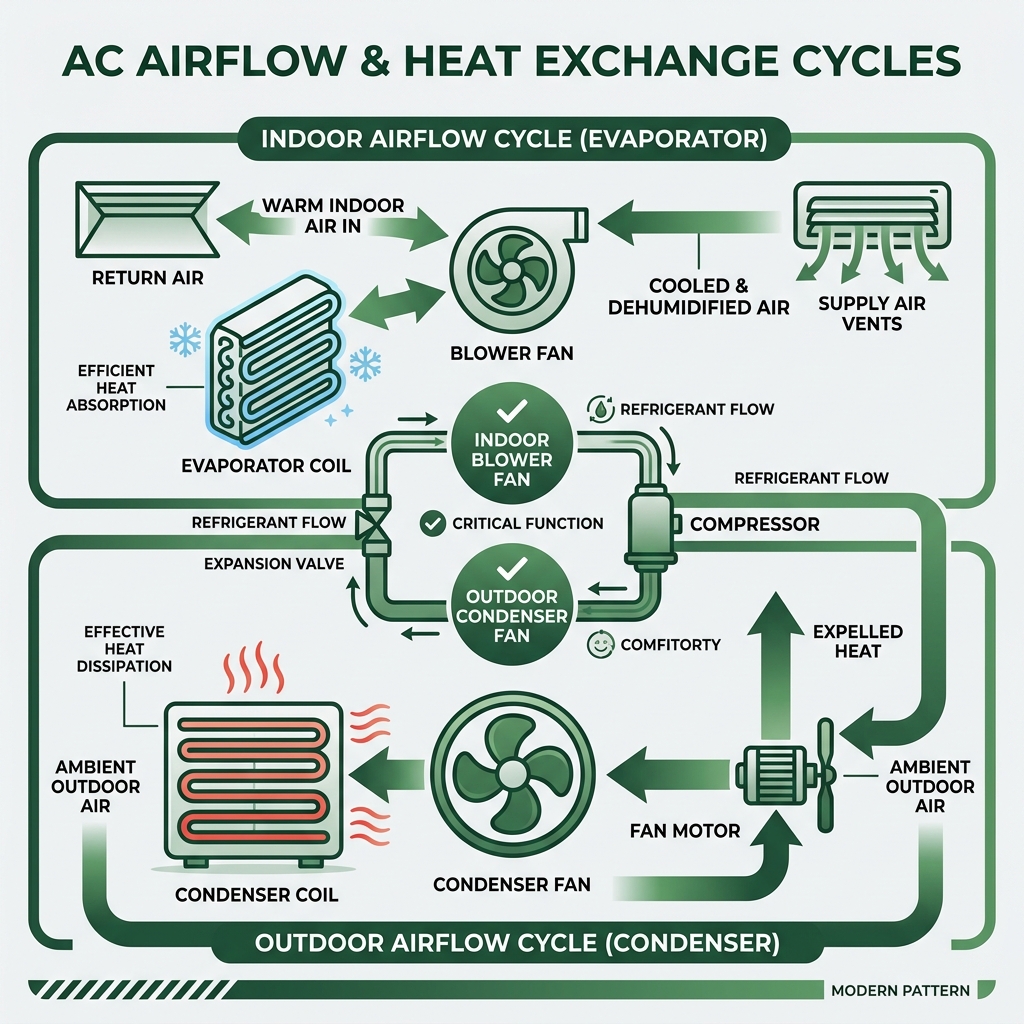
At the heart of every efficient air conditioning system are its fan motors, working tirelessly to maintain your home’s comfort. We often think of the compressor as the AC’s engine, but without its fan motors, the entire cooling process grinds to a halt. In a typical split AC system, two primary fan motors play distinct yet equally vital roles: the indoor blower fan and the outdoor condenser fan.
The indoor blower fan, located within your furnace or air handler, is responsible for circulating conditioned air throughout your home. After the refrigerant absorbs heat and humidity from your indoor air at the evaporator coil, the blower fan pushes this now-cooled and dehumidified air through your ductwork and out through the vents. This continuous circulation is key to achieving consistent temperatures and managing indoor humidity levels, contributing significantly to your comfort. A well-functioning blower fan ensures proper airflow dynamics, which is critical for efficient heat transfer and preventing issues like frozen evaporator coils.
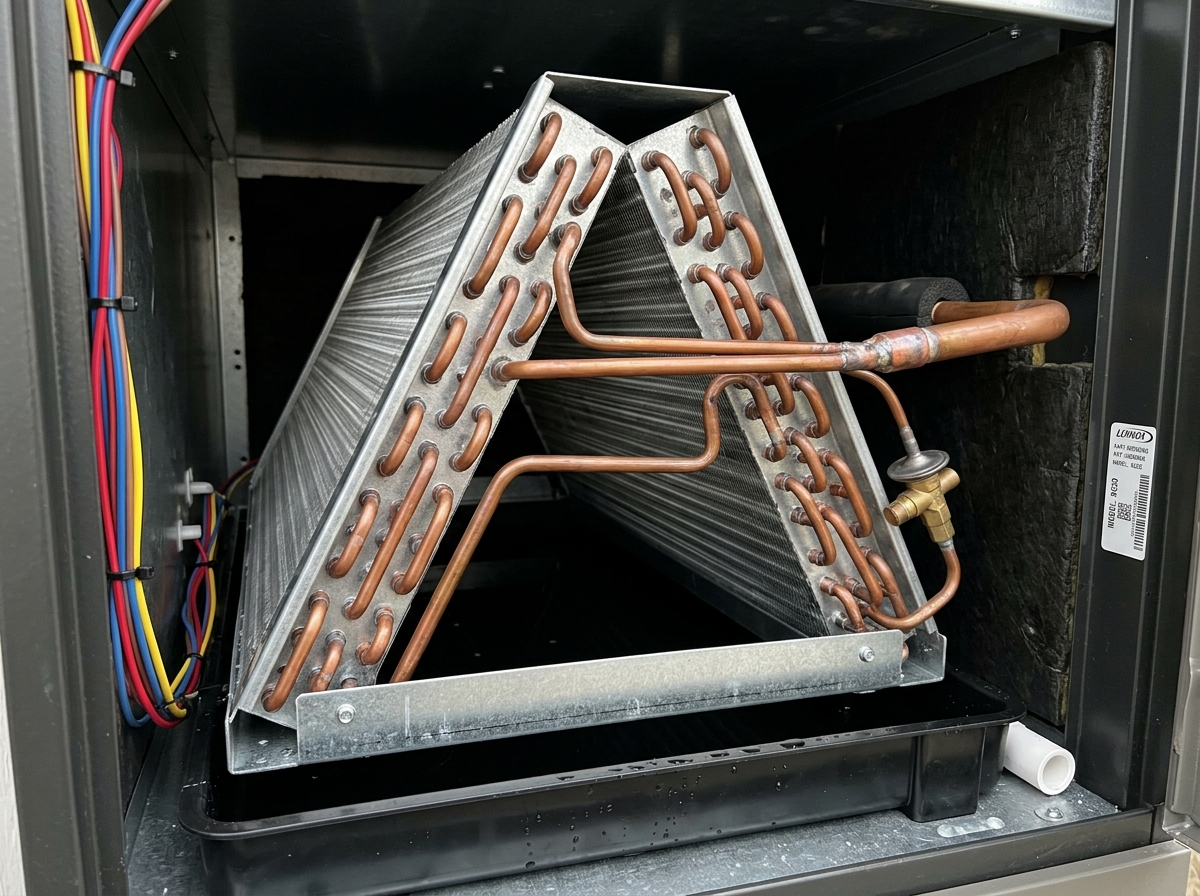
Meanwhile, the outdoor condenser fan has the crucial task of expelling heat from your home. Once the refrigerant, now hot and under high pressure, travels to the outdoor unit, the condenser fan pulls ambient air across the condenser coil. This process allows the refrigerant to release the heat it absorbed indoors, cooling it down and causing it to condense back into a liquid state. Without the condenser fan, heat dissipation cannot occur effectively, leading to rapidly rising pressures and temperatures within the system. This not only compromises cooling capacity but also puts immense strain on the compressor, potentially leading to catastrophic failure. Both fans are integral to the AC’s ability to transfer heat and maintain a comfortable indoor environment, making their proper operation non-negotiable for efficient cooling.
Common Reasons for an AC Unit Fan Motor Not Spinning
When your AC fan motor refuses to spin, it’s often a symptom of underlying issues that range from simple electrical glitches to more complex mechanical failures. As experts, we’ve identified several common culprits that frequently lead to a non-spinning fan, each with its own set of indicators.
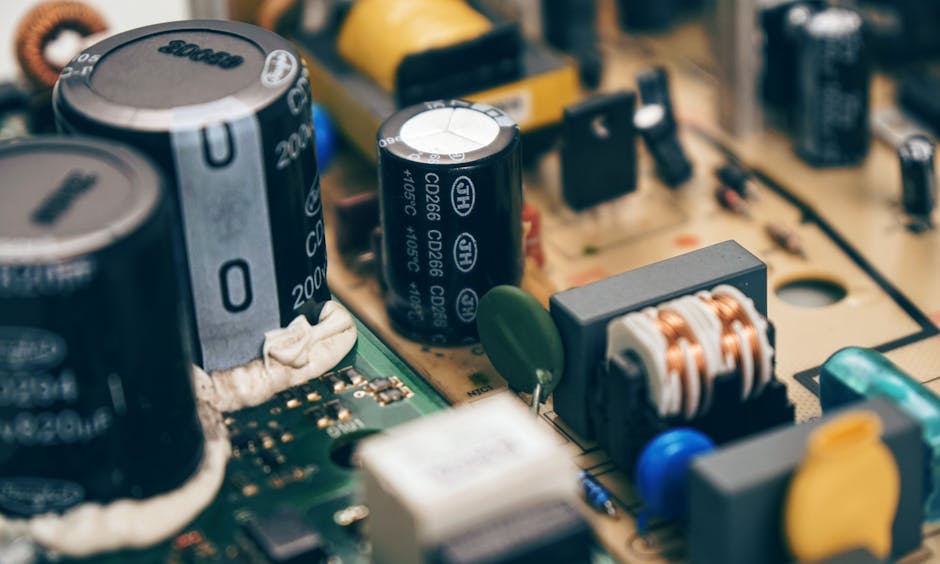
One of the most frequent causes we encounter is a failed capacitor. The capacitor acts like a battery, providing the electrical “kick” needed to start the fan motor and then supplying a steady charge to keep it running. Over time, these components can degrade, losing their ability to hold a charge. You might notice visual signs like a bulging top, leaking oil, or burnt terminal connections. A capacitor failure often results in the motor humming loudly but not spinning, as it receives power but lacks the necessary starting torque. Many AC units, especially older models, utilize dual-run capacitors that serve both the fan and the compressor, meaning a single faulty capacitor can impact multiple critical components. Voltage fluctuations and consistent high temperatures can accelerate capacitor degradation.
Symptom Category Capacitor Failure Motor Burnout/Seized Bearings Sound Humming, buzzing Grinding, squealing, or silence Fan Movement No spin, can be manually pushed to start Stuck, very stiff, or no movement at all Motor Heat Hot (due to locked rotor current) Extremely hot, burning smell Visual Cues Bulging, leaking, corroded terminals Discoloration, melted wires, physical damage Manual Spin Spins freely, but won’t start on its own Difficulty spinning, resistance, grinding Another significant issue is a burnt-out fan motor or seized bearings. If the fan motor’s internal windings burn out due to electrical overload or prolonged overheating, it will simply cease to function. Similarly, if the motor’s bearings seize due to lack of lubrication or wear and tear, the motor shaft cannot rotate. In these cases, the fan blades will be difficult or impossible to spin by hand, and you might hear grinding noises or detect a burning smell. Unlike a capacitor issue where the motor might hum, a truly burnt-out motor often makes no sound at all or a faint electrical smell.
Debris and obstructions are surprisingly common culprits. Leaves, twigs, grass clippings, or even small toys can fall into the outdoor unit and jam the fan blades, preventing them from spinning. This blockage can quickly lead to motor overheating and failure if not addressed. Similarly, fan blade imbalance caused by bent, cracked, or missing blades can lead to excessive vibration, ultimately damaging the motor bearings and preventing smooth operation.
Electrical issues are also frequent. A contactor failure can prevent power from reaching the fan motor, even if the thermostat is calling for cooling. The contactor is a relay switch that sends high-voltage power to the outdoor unit’s components. If it’s stuck open or has burnt contacts, the fan won’t receive the necessary electricity. Lastly, glitches or failures in the control board can disrupt the electrical signals that tell the fan motor when to start and stop, leading to erratic behavior or complete non-operation. Identifying the specific cause is the first step toward restoring your AC’s cooling capabilities.
Safe Troubleshooting and Diagnostic Steps for Homeowners
When your AC fan motor isn’t spinning, it’s natural to want to investigate. However, safety must always be your top priority. Air conditioning units contain high-voltage electricity and rapidly moving parts, so exercise extreme caution. Before performing any checks, always ensure the power to your AC unit is completely off. Turn off the thermostat, then locate the circuit breaker for your AC unit in your home’s electrical panel and flip it to the “OFF” position. For outdoor units, also locate the dedicated electrical disconnect box (usually a small gray box mounted on the wall near the unit) and pull the disconnect handle or flip the switch inside.
Once power is safely off, you can begin some initial diagnostic steps:
Initial DIY Power Checks:
- Thermostat Settings: Double-check that your thermostat is set to “Cool” mode and the temperature setting is lower than the current room temperature. Ensure the fan setting is on “Auto” or “On.” If the batteries are low, replace them.
- Circuit Breaker: Confirm the AC unit’s circuit breaker hasn’t tripped. If it has, reset it. If it immediately trips again, do not attempt to reset it repeatedly; this indicates a serious electrical fault requiring professional attention.
- Air Filter Inspection: A severely clogged air filter can restrict airflow so much that it causes the indoor blower fan to struggle or even stop, and can indirectly impact the outdoor unit due to system strain. Inspect your filter and replace it if it’s dirty.
After confirming the power is off, open the outdoor unit’s access panel (usually held by a few screws) to visually inspect the fan area. Look for any obvious debris obstruction like leaves, sticks, or trash that might be jamming the fan blades. Carefully remove any obstructions by hand. Also, inspect the fan blades for any visible damage, such as bends or cracks, which can cause imbalance or prevent spinning.
If the fan hums but doesn’t spin, or if you suspect a capacitor issue, you can perform a manual spin test. With the power still off and confirmed, use a long, non-conductive object (like a wooden stick or a screwdriver with a well-insulated handle) to gently push one of the fan blades. If the fan starts spinning freely and continues to do so after a gentle push, but won’t start on its own when the power is briefly restored (and then immediately turned off again), it’s a strong indicator of a faulty capacitor.
Capacitor discharge safety is paramount. Capacitors can store a lethal electrical charge even after the power supply is disconnected. Never touch the terminals of a capacitor without first discharging it. The safest method for homeowners is to use a 20k-ohm, 2-watt resistor with insulated leads to discharge the capacitor. Alternatively, some technicians use a screwdriver with an insulated handle to short the terminals, but this method carries a higher risk and can damage the capacitor if it’s still good. If you’re uncomfortable with this step, it’s best to call a professional. These initial steps can help narrow down the problem, but for anything beyond basic visual checks and resetting a breaker, professional expertise is highly recommended.
Why Professional Intervention Defines a Trusted HVAC Service
While basic troubleshooting can help identify some common issues, many AC fan motor problems require the nuanced skill and specialized equipment of a professional HVAC technician. Attempting complex electrical repairs or component replacements without proper training can be dangerous and may lead to further damage to your system, voiding warranties and incurring greater costs in the long run.
A trusted HVAC service brings diagnostic precision to the table. Technicians utilize advanced tools like multimeters to accurately test voltage, amperage, and capacitance, pinpointing exactly where the electrical fault lies. They can also perform refrigerant pressure monitoring to ensure the system’s pressures are within optimal ranges, as incorrect pressures can sometimes indirectly affect fan operation or be a symptom of a larger issue. Furthermore, professionals have access to and expertise with OEM parts (Original Equipment Manufacturer) or high-quality aftermarket alternatives that are specifically designed for your unit, ensuring compatibility and reliability.
Electrical safety is non-negotiable when dealing with AC units. High-voltage components, such as contactors and capacitors, can deliver a dangerous or even lethal shock. Professional technicians are trained in safe handling procedures, including proper lockout/tagout protocols and capacitor discharge techniques. They understand the intricacies of system recalibration after repairs, ensuring all components work in harmony for optimal performance and energy efficiency according to April 2026 standards.
Identifying a Trusted HVAC Partner for Complex Electrical Repairs
When facing a non-spinning AC fan motor, especially if initial DIY checks don’t resolve the issue, partnering with a trusted HVAC professional is crucial. These experts are equipped to handle the complexities of your system’s electrical components. They possess the necessary tools and knowledge for high-voltage handling, ensuring safety during diagnosis and repair.
For example, replacing a faulty capacitor involves more than just swapping out a part; it requires safe discharge of residual electricity and correct wiring. Technicians can perform motor winding continuity tests to determine if the motor itself has an internal electrical fault. They also meticulously inspect wiring integrity and check for terminal corrosion, which can disrupt electrical flow and cause intermittent operation. Their adherence to strict safety compliance standards protects both your property and themselves from electrical hazards. When considering a professional for your AC fan motor repair, look for those who emphasize transparency, provide clear explanations of the issue, and offer detailed quotes before beginning work.
The Long-Term Benefits of Trusted HVAC Maintenance Plans
Beyond immediate repairs, establishing a relationship with a trusted HVAC provider for regular maintenance is the best way to prevent future fan motor failures and extend the lifespan of your entire AC system. Comprehensive maintenance plans typically include annual inspections where technicians thoroughly examine all components.
This includes coil cleaning to ensure efficient heat exchange, bearing lubrication for smooth motor operation, and belt tensioning (in older units) to prevent slippage and wear. Proactive maintenance helps identify potential issues before they escalate, significantly improving energy efficiency and reducing your utility bills. With the rapidly evolving 2026 technology integration in HVAC systems, regular professional check-ups ensure your unit is operating optimally with the latest standards. Furthermore, consistent maintenance often helps preserve your system’s warranty, protecting your investment for years to come.
Economic Realities: Repairing vs. Replacing Your AC Unit
When faced with a significant AC repair, particularly a fan motor issue, homeowners often grapple with a critical decision: repair the existing unit or invest in a full replacement? This choice hinges on several factors, including the age of your system, the nature of the repair, and the potential for future problems.
Most AC units are designed to last between 10 to 15 years. If your unit is approaching or has exceeded this 10-15 year lifespan, a fan motor failure might signal that other components are also nearing the end of their useful life. While a fan motor replacement is generally less expensive than a new unit, it’s important to consider the overall health of your system.
One of the most severe compressor damage risks stems directly from a non-spinning fan motor. If the compressor continues to run without the fan dissipating heat, it will rapidly overheat, leading to catastrophic and often irreparable damage. A compressor replacement alone can be nearly as costly as a new entry-level AC unit. Therefore, a timely fan motor repair can prevent a much more expensive problem.
When conducting a repair cost analysis, consider the cost of the fan motor replacement (which can range from a few hundred to over a thousand dollars, depending on the motor type and labor) versus the cost of a new, high-efficiency system. A new AC unit, especially one meeting the latest SEER2 ratings (Seasonal Energy Efficiency Ratio 2) introduced in 2023, can offer substantial long-term energy savings. These more efficient units also have a lower environmental impact due to reduced energy consumption.
Beyond energy savings, a new AC system can significantly increase your property value and provide greater comfort and reliability for years to come. If your current unit has a history of frequent breakdowns, or if the repair cost for the fan motor (and potentially other components) approaches 30-50% of the cost of a new system, replacement often becomes the more economically sound decision. The consequences of overheating due to a failed fan extend beyond just the motor; they can compromise the entire system, making a proactive decision about repair versus replacement crucial for both your wallet and your comfort.
Frequently Asked Questions about AC Fan Failures
We frequently receive questions from homeowners about their AC fan motors. Here are some of the most common inquiries and our expert insights:
Is it safe to run my AC if the outdoor fan isn’t spinning?
Absolutely not. Running your AC system when the outdoor fan isn’t spinning is extremely dangerous for your unit and can lead to very costly damage. The outdoor fan’s job is to dissipate heat from the refrigerant. Without it, the compressor will quickly overheat, leading to excessively high-pressure limits within the system. This can cause the compressor, the most expensive component of your AC, to fail permanently. We’ve seen cases where a compressor can sustain critical damage within just 15-30 minutes of operating without a functioning fan. Many modern units have emergency shutdown mechanisms to prevent this, but relying on them can still strain the system. Always turn off your AC immediately if you notice the outdoor fan isn’t spinning.
Why does my AC unit hum but the fan refuses to rotate?
A humming sound with no fan rotation is a classic symptom of a faulty capacitor. The capacitor provides the initial electrical surge, or “starting torque,” needed to get the fan motor spinning. If the capacitor has degraded, it can’t deliver this jolt, even though the motor is receiving continuous power. This causes the motor to draw a high amount of current (known as locked rotor amperage), leading to the humming sound and rapid overheating. Other less common reasons could include mechanical binding within the motor itself, preventing rotation, or an issue with the electrical phase shift required for the motor to operate correctly. In either scenario, professional diagnosis is recommended to safely identify and rectify the problem.
How do I know if my indoor blower or outdoor condenser fan is the problem?
Distinguishing between a faulty indoor blower fan and an outdoor condenser fan is relatively straightforward.
- Outdoor Condenser Fan: If you hear the outdoor unit making noise (like the compressor running) but see no rotation of the fan blades, or if the unit feels unusually hot to the touch, the outdoor condenser fan is likely the culprit. You’ll also notice that while the unit is running, it won’t be blowing cold air indoors.
- Indoor Blower Fan: If your outdoor unit appears to be running normally (compressor and fan are active), but you feel no airflow coming from your indoor vents, or only very weak airflow, then the indoor blower fan is probably the issue. You can also test this by setting your thermostat to “Fan On” mode (not “Cool”) and listening for the distinct sound of the indoor fan operating. If you hear nothing, or only a faint hum from the air handler, it points to the indoor unit.
Conclusion
A non-spinning AC fan motor is a clear indicator that your cooling system requires immediate attention. From failed capacitors and seized bearings to simple debris obstructions, the causes can vary, but the impact on your comfort and your system’s longevity is significant. We’ve outlined safe, initial troubleshooting steps that homeowners can undertake, emphasizing the critical importance of electrical safety before any inspection.
However, for accurate diagnosis and reliable repair, particularly involving electrical components or complex mechanical issues, the expertise of a professional HVAC technician is invaluable. Investing in professional diagnostics and regular maintenance not only resolves immediate problems but also contributes to the long-term system longevity, enhances energy efficiency, and ensures your home remains a comfortable haven, especially during those hot Central Texas summers. By prioritizing proactive maintenance and understanding when to seek expert diagnostics, you can safeguard your investment and enjoy consistent cooling well beyond 2026 cooling standards.