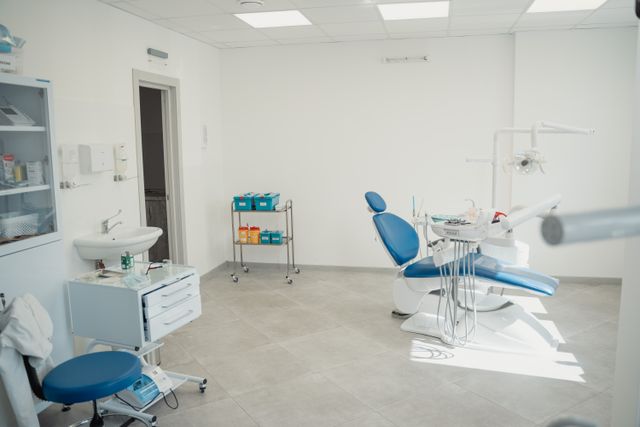
Selecting a family dentist is about more than just finding a random dentist you tolerate bringing your family to every six months. The qualifications and measurements are part of it, but if you’re honest with yourself, the biggie for any parent in their search for a new dentist is the stuff that’s tough to quantify in lists: Is this place local and neighbourly feeling? Friendlier than you’d expect out of a dentist’s office? Does it seem like we’d actually belong as patients here for a long, long while?
The best-of-both-worlds combo above likely sounds squishy and not high science compared to mapping out patient care philosophies and network affiliations, but actually, the vibe is totally linked to the metrics. Practices with reputations for being lenient with little ones and easy on nervous adults are that way because from the top on down, the team genuinely wants to get people in the door and keep them there.
Start with the two checks that aren’t optional
Before considering any other aspects of a dental practice, you should quickly make two important checks.
Firstly, search the General Dental Council register for any UK practice and you can see immediately whether all its dentists are qualified and currently allowed to work. This won’t tell you whether they’re supportive of nervous seven-year-olds, or even whether they’ve ever treated one, but it will identify those who you wouldn’t want coming anywhere near your child.
The second check is the practice’s Care Quality Commission rating: they inspect all dentists against measures including whether the service is safe, effective, caring, responsive to patients’ needs, and well-led, and publish the result. A practice rated “requires improvement” isn’t necessarily unsafe, but you want to know why they didn’t automatically get a clean bill of health – and their inspection report will tell you.
These two checks are a minimum. They won’t make the decision for you, but allowing a nice website to replace a few minutes of actual checking is something every parent alive is sometimes guilty of.
Location and school-run logistics matter more than people admit
This often overlooked step is the one that seals the deal after the clinical requirements have been met.
For a local practice, geography is a major limitation. A parent looking for a dentist in Hounslow isn’t just searching CQC ratings about a shortlist of ten – they are assessing which of the two or three real local options can fit into the school run, work hours, and the practicalities of actually getting a reluctant child there short of doing a 40-minute round trip. A practice that’s ten minutes from school with a slot before or after school will beat a marginally higher-rated one the other side of town that opens 9 to 5 because that will work for you. And you’re far closer to using the practice consistently. Which for the under 18s is almost all of what preventive dental care is about.
Also, check parking, or for many places transport. It seems irrelevant until you’re the one trying to get a crying five-year-old from a car park through the rain to a waiting room.
Work out what NHS and private actually mean for your family
It has become increasingly hard to gain NHS dental care over recent years. Official figures for the two years to the end of 2023 showed that just 49.1% of adults in England had visited an NHS dentist in that time – the lowest percentage since records began.
Why does that statistic matter here? Because it changes the question prospective parents need to get into the habit of asking from “is this a good dentist?,” or even the lazy “what’s the best dentist?,” to “can we even get seen here, and for what?” Some practices are fully NHS, some fully private, and a growing number operate a model where they take NHS patients for NHS treatments and private patients whenever they can squeeze them in and/or the treatment goes beyond the NHS’s agreed scope.
Are you taking on new NHS patients right now, or operating a waiting list? What’s the split of children here like? What’s actually covered by the NHS as part of its “band” system, which lumps various treatments together, and what’s outside it? If private care is on the table, ask about payment plans. Many family practices offer Denplan or similar monthly schemes that spread the cost of routine care. For a family with two or three kids needing check-ups twice a year, that predictability is worth asking about upfront.
Read reviews for the details, not the star rating
A 4.8 average tells you almost nothing useful. What you want is the text underneath it.
Search Google and the NHS website reviews specifically for mentions of children, nervous patients, or waiting times. Parents who’ve had a rough experience getting a toddler through a check-up tend to write about it in detail – and so do parents who’ve had a genuinely good one. Look for patterns: does the same dentist or hygienist get named repeatedly and positively? Are there recurring complaints about being rushed, or about long waits past the appointment time? A single bad review means little. Five reviews all mentioning the same receptionist being short with people, or the same dentist being brilliant with anxious kids, tells you something real.
Look at the whole team, not just the dentist
Most parents research the dentist online. They read review sites, maybe even post on local Facebook groups requesting recommendations. They stand outside prospective practices and scrutinize the surgery’s opening hours, the number of A4 sheets sellotaped to the window flaking with sun-bleached information on out-of-hours emergencies, what’s available on the NHS. They weigh the vibe and location against the commute and school run. They have needs. Then they stop there. That’s only half the picture.
Dental hygienists do a huge amount of the preventive work – scaling, polishing, advice on brushing technique and diet – and a practice with a dedicated hygienist is usually more serious about prevention than one that only sees patients when something’s wrong. Dental nurses are often the ones actually settling a nervous child into the chair, and their manner counts for a lot. Receptionists set the tone before you’ve even sat down; a practice where the front desk is warm and unhurried tends to reflect a calmer clinical culture behind it.
When you’re comparing shortlisted practices, ask who you’ll actually be seeing for routine visits. Continuity of care is underrated. If a practice rotates locum dentists through every few months, you’ll spend half of every visit re-explaining your child’s history instead of building the kind of relationship where the dentist just knows your kid gets anxious about the suction tool. High staff turnover is worth asking about directly – “how long have your dentists typically been with the practice” is a fair question and a good practice won’t dodge it.
Ask how they handle anxiety, because most kids have some
It’s not rare for adults to be scared of the dentist. Neither is it rare for kids. A family dentist, if they’re used to treating young patients, will know that. A family dentist who isn’t used to treating young patients, probably because they’re not great with nerves or lack the qualifications to handle children separately from adult patients, will still know that. Ask how they handle nervous patients. You’ll quickly spot which group you’re dealing with.
Dentists often talk about “common dental phobia triggers” – concern about pain, fear of choking, a reaction to the noise of the drill, a past bad experience with another practice. These are common in children too, but they might have some bespoke ones, like the dentist’s uncomfortable chair or the fact the waiting room smells of boiled sweets and alarm. A practice equipped for kids is ready with alternatives: baking soda rinses instead of a squeaky polish, quieter tools, a comfortable towel instead of a chair. This will help them much more next time than a sticker.
Visit in person before you commit
A website and a phone call only get you so far. Book a consultation or ask to look round before switching the whole family over, especially if you’re moving from a practice you’ve used for years.
Once you’re there, notice things a brochure can’t show you. Is the waiting room actually set up for kids, or is it a room of plastic chairs and old magazines? Is the noise level manageable, or does it feel clinical and cold? Do staff acknowledge children directly rather than talking over their heads to the parent? These aren’t superficial details. A child who feels dismissed or unsettled in the waiting room is already anxious before they’ve sat in the chair, and that shapes the whole appointment.
Ask about emergency provision while you’re there too. Family life means teeth get knocked out at football, chipped on playground equipment, or start aching on a Sunday night. Ask what happens if that occurs – is there a same-day emergency slot, an out-of-hours number, or an arrangement with another local provider. A vague answer here is a red flag; a good family practice will have a clear, rehearsed answer because they’ve needed it before.
Use the first real appointment to test preventive care
After you’ve registered, the first appointment is your litmus test for whether this is a place that actually discusses prevention or just fills holes.
You are looking for how the dentist treats fluoride varnish application, eating habits in relationship to enamel, and whether or not they recommend that your child’s molars be sealed – not just whether there’s decay to fill. Oral health education, when done correctly, is half about coaching parents: which snacks to avoid, how to get a six-year-old to brush for two minutes without a brawl, when to start flossing. None of that is likely to be discussed at a shop focused on volume. But it should be at a practice focusing on lifetime family patients.
If it’s not mentioned, ask. “What would you recommend for keeping her teeth healthy between now and the next check-up” is a good question to put the issue on the table and a good dentist will actually have something more to say than “brush twice a day.”
The real test is whether it feels like yours
Once you have gone through the checklist and done all the necessary research, there is still the emotional aspect to consider. Does your child feel comfortable and welcomed at the dentist’s office? Are the staff friendly and do they make an effort to remember your child’s name? Is the environment warm and inviting? Does your child slowly start to feel less anxious during visits?
These are the aspects that you can only discover through personal experience and repeated visits. Clinical competence gets a practice onto your shortlist. But that local, familiar feel is what makes a family actually stay for the next ten years of check-ups, fillings, and the occasional dramatic playground incident. Trust that instinct once you’ve done the checks that matter – it’s usually right.