Eye problems rarely announce themselves dramatically. For many people, the first sign is subtle: a little more squinting while reading, headaches after screen time, or the strange realization that street signs don’t look quite as sharp as they once did. These small shifts tend to push people toward scheduling an eye exam, though many still arrive unsure about what will actually happen during the visit.
Eye specialists rely on several diagnostic tests to understand how the eyes are functioning beneath the surface. In busy cities like Manhattan, where long workdays and constant digital exposure can strain vision, those exams become especially important for detecting changes early and guiding the right care.
Below are six of the most common tests ophthalmologists perform and why each one plays a meaningful role in understanding eye health.
1. Visual Acuity Test: Measuring How Clearly You See
Visual acuity testing measures exactly how clearly the eyes can see at various distances. Patients read rows of letters that shrink line by line, allowing the doctor to determine how well each eye resolves detail. While the process may look simple, the results help identify refractive errors such as nearsightedness, farsightedness, or astigmatism.
When persistent blurriness begins to interfere with daily activities, people often seek guidance from an ophthalmologist in Manhattan who can evaluate whether the changes relate to prescription changes or something deeper within the eye. That curiosity usually leads to a more comprehensive evaluation where multiple tests work together to create a clearer picture of vision health.
Visual acuity testing, as the starting point for many examinations, is incorporated by experienced places such as Cohen Eye Institute because it helps frame the rest of the diagnostic process. For patients, it’s usually the moment when vague vision complaints start turning into measurable information.
2. Refraction Test: Determining the Right Prescription
Seeing letters on a chart is only the first step. The next question becomes whether corrective lenses could sharpen that view.
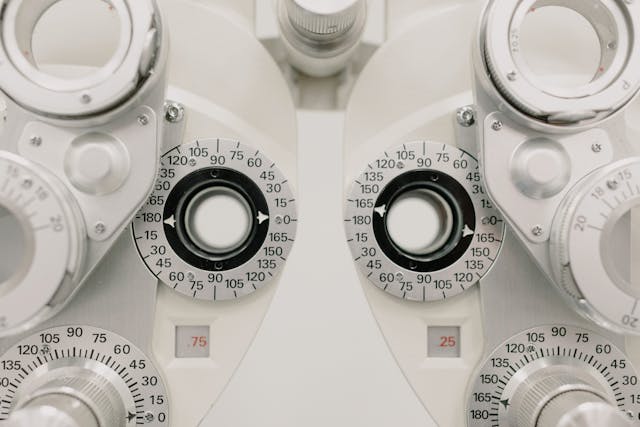
A refraction test determines the exact lens prescription needed to correct vision. During the exam, patients look through a device called a phoropter while the doctor switches between different lenses and asks which option makes letters appear clearer.
The process might feel repetitive at times, but each small adjustment reveals how light focuses on the retina. Even minor changes in lens strength can make a noticeable difference in daily comfort, especially for people who spend long hours reading or working on screens. This part of the appointment is where vision improvement becomes immediately noticeable.
3. Slit Lamp Examination: A Closer Look at Eye Structures
Some eye issues cannot be detected through vision tests alone. Irritation, redness, or unexplained discomfort can originate from structures at the front of the eye that require magnified inspection.
A slit lamp exam uses a specialized microscope paired with a bright beam of light, allowing the ophthalmologist to examine the cornea, iris, eyelids, and lens in fine detail. Under magnification, doctors can identify early signs of infections, corneal damage, cataracts, or inflammation that might otherwise go unnoticed.
Patients usually sit with their chin resting on a small support while the doctor moves the light across different areas of the eye. The process takes only a few minutes, yet it reveals structural details that standard vision testing cannot capture. It’s one of the exams that quietly does a lot of diagnostic work behind the scenes.
4. Tonometry Test: Checking Eye Pressure
Glaucoma is one of the conditions ophthalmologists closely monitor because it can develop gradually, with no noticeable symptoms in its early stages. Increased pressure inside the eye can damage the optic nerve over time, which is why measuring that pressure becomes a routine part of many eye exams.
Tonometry evaluates intraocular pressure using either a gentle puff of air or a small instrument that briefly touches the eye after numbing drops are applied. The idea of anything touching the eye may sound intimidating, yet most patients are surprised by how quickly the measurement is done.
Within seconds, the doctor can determine whether pressure levels fall within a healthy range. That data helps determine whether additional monitoring or testing might be necessary.
5. Dilated Eye Exam: Viewing the Retina and Optic Nerve
Some of the most important structures in the eye sit at the very back, where they can’t be seen clearly without expanding the pupil.
During a dilated eye exam, special drops widen the pupils so the ophthalmologist can examine the retina and optic nerve using bright light and magnification. This expanded view helps detect conditions like retinal tears, diabetic eye disease, macular degeneration, and optic nerve abnormalities.
Patients typically notice increased light sensitivity for a few hours afterward, which is why sunglasses become helpful after the appointment. Even with that temporary inconvenience, the test provides a level of visibility that routine exams simply cannot achieve.
6. Visual Field Test: Mapping Peripheral Vision
Central vision tends to receive the most attention, but the outer edges of our sight—peripheral vision—play a major role in everyday awareness and mobility.
A visual field test maps how well a person sees objects outside their direct line of sight. Patients focus on a central point while lights appear at different locations within a dome-shaped device, pressing a button whenever they detect movement or changes in brightness in their peripheral vision.
This test can reveal subtle blind spots that may signal conditions affecting the optic nerve or neurological pathways. Detecting those gaps early allows doctors to monitor changes and recommend treatment before vision loss becomes more significant. It’s an eye-opening experience to realize how much information their peripheral vision processes automatically.
Conclusion
Eye exams are more than a quick check of whether you need stronger glasses. Each test serves a specific purpose, helping ophthalmologists evaluate different parts of the visual system—from surface structures at the front of the eye to the delicate nerve connections at the back. When these exams work together, they create a comprehensive picture of how the eyes function and whether any early signs of disease are developing.
Understanding what happens during these evaluations often reduces much of the uncertainty around eye appointments. What might seem like a series of small tests is actually a carefully designed process aimed at protecting one of the senses people rely on every single day.