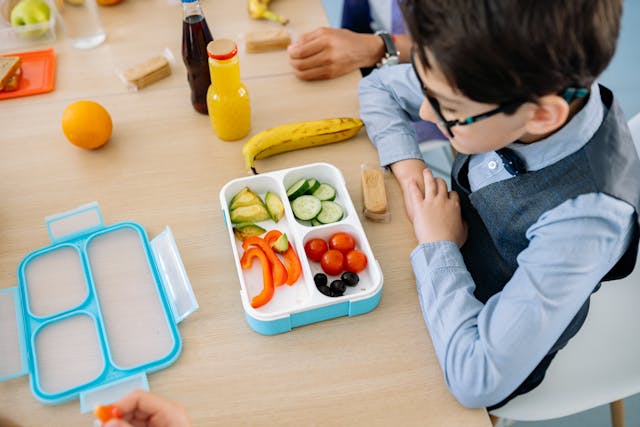
Packing school lunch should be simple, right? In reality, it is one more thing to juggle in a busy morning. If the bag is too small, everything gets squashed. If it is too big, containers slide around, and leaks turn into a mess. Then there is the classic school problem where the lunch bag gets left behind on the sports field or mixed up with someone else’s.
We explore what you need from a school lunch bag, focusing on features such as insulation. We also look at why food-friendly, non-toxic materials are important to your child’s health and how small design details, like clips and attachment points, can help the lunch bag stay with the school bag.
Insulation for a school lunch bag
Insulation is one of the first things to check in a school lunch bag. In this case, it’s partly food safety and keeping the food more appetising. A well-insulated lunch bag slows down heat gain on warm days. In the same way, cold items stay cooler for longer, which is useful for sandwiches with fillings like chicken or cheese.
Insulation works best when the bag is packed thoughtfully, so keep chilled items together and use separate compartments to reduce squashing.
Read Also: How to Keep Young Kids Moving When School’s Out
Choose the right size lunch bag for the school day
The right-sized school lunch bag has enough room for a main lunch item plus one or two snacks. It also helps if the shape supports common containers, so you’re not damaging the seams and trying to fit everything together every morning.
A slightly roomier lunch bag makes it easier to pack a second snack as well and keep everything neat, while still being compact enough to clip onto the school bag.
Compartments that keep foods separate
Compartments make a big difference in a school lunch bag. When everything sits in one space, lunch tends to shift around, heavier items press into softer snacks, and sandwiches get squashed.
Separate sections help keep things in place, so you can pack the “main lunch” in one compartment and snacks in the other, without everything ending up mixed together. It helps contain small spills, so a leaky yoghurt does not spread through the whole bag. Keeping foods separate also makes the inside easier to wipe down.
Non-toxic materials in a school lunch bag
You want a clear designation that the lunch bag is made with food-friendly materials. Totem also highlights chemical-free materials across the lunch bag range, which is reassuring when you’re comparing options for daily use.
A lunch bag that stays with the school bag
A lunch bag only works if it actually makes it to school and back, and that is where “stays with the school bag” features matter. Look for a lunch bag that can clip onto the school bag. A clip-on attachment or a grab-handle clip helps secure the lunch bag to the school bag for easy transport.
Matching the school bag makes mornings simpler
Matching the school bag makes mornings simpler because it turns your child’s kit into a grab-and-go set. When the lunch bag looks like it belongs with the school bag, it is quicker to spot by the door, easier for kids to recognise, and less likely to get left behind at school.
Everyday lunch packing routines
A matching lunch bag also helps with everyday routines. You know it will clip on neatly, pack comfortably, and look tidy together. For kids, a matching set feels more organised, which can be a small confidence boost on busy mornings when everyone is trying to get out of the house on time.
Conclusion
Choosing a school lunch bag comes down to the details that make weekday packing easier and lunch more enjoyable. Prioritise insulation that helps food stay fresh, a size that fits what your child actually eats, and compartments that keep snacks organised instead of squashed.
From there, look for food-friendly, non-toxic materials you can feel good about, and features that help the lunch bag stay with the school bag.