Key Takeaways
- Understand your furnace’s expected lifespan and common failure indicators.
- Identify rising costs and performance issues early to enable efficient repairs or timely replacements.
- Maintain heating safety, efficiency, and air quality with proactive decisions.
Table of Contents
- Introduction
- Age of Your Furnace
- Rising Energy Bills
- Frequent Repairs
- Uneven Heating
- Unusual Noises
- Visible Signs of Wear
- Poor Air Quality
- Difficulty Starting the Furnace
- Yellow Pilot Flame
- Conclusion
Maintaining a comfortable and safe home environment depends on the reliability and efficiency of your heating system. Learning when your furnace is nearing the end of its useful life can help you avoid unexpected breakdowns, expensive emergency repairs, and potential safety hazards. Proactive maintenance and servicing your home’s furnace play central roles in keeping your household secure and comfortable throughout the winter months.
Many homeowners overlook subtle warning signs that their furnace is no longer performing optimally. As seasons pass, recurring issues can worsen, potentially causing discomfort or even hazards inside your home. Recognizing the red flags early and acting before a complete breakdown occurs not only safeguards your comfort but also your energy budget.
Making informed decisions about when to repair or replace your furnace should center on an understanding of how older systems operate, the impact on energy bills, and the risks associated with compromised equipment. By paying close attention to the signs outlined below, you can take timely action to ensure an efficient, dependable heating system for years to come.
If you are currently experiencing recurring issues or considering energy-efficient upgrades, installing a new furnace can deliver both improved comfort and lower operating costs. Making the switch to updated equipment can also enhance indoor air quality and home safety while reducing your home’s carbon footprint.
Age of Your Furnace
The average lifespan of a furnace is between 15 and 20 years, depending on maintenance history, frequency of use, and system quality. As your furnace ages, its efficiency decreases, leading to uneven heating and higher operating costs. If your system is approaching or has exceeded this anticipated lifespan, it is often more economical and safer to consider a replacement. Periodic inspections can help you understand where your unit stands within this timeline.
Rising Energy Bills
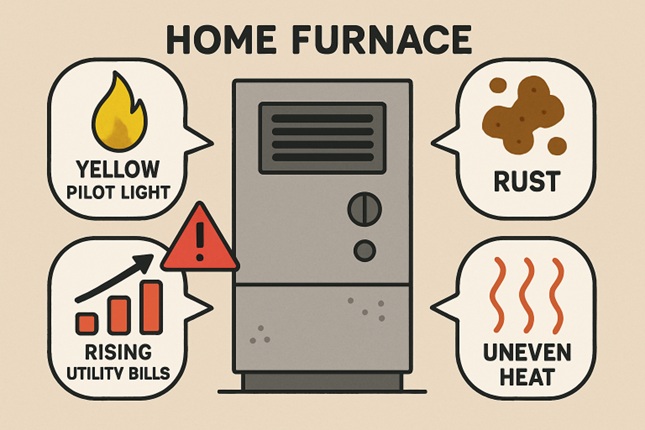
One of the first signs your furnace may be reaching the end of its reliable years is a noticeable, unexplained increase in your monthly heating bills. This spike often occurs even if your overall usage stays the same. As internal parts become less efficient, the system consumes more energy to achieve the same results. Upgrading to a high-efficiency model can lead to monthly savings and reduce the strain on both your wallet and the environment.
Frequent Repairs
Furnaces typically require more maintenance as they age. If you find yourself calling a technician several times per season, repair costs can add up quickly. Beyond lost time and comfort, repeated malfunctions might indicate a systemic problem no longer worth fixing. Investing in a replacement rather than constant short-term fixes can offer peace of mind and long-term savings.
Uneven Heating
Another indicator of a failing furnace is uneven temperature distribution throughout your house. If certain rooms are colder than others, or you notice drafts and hot spots, the system’s ability to circulate warm air may be compromised. This issue could stem from failing components, leaky ductwork, or an outdated furnace that can no longer keep up with household needs. Persistent uneven heating rarely resolves without a significant upgrade.
Unusual Noises
Loud banging, rattling, squealing, or grinding noises are not normal for a functioning furnace. These sounds often signal loose or deteriorating parts inside the unit, such as worn-out bearings or a failing blower motor. Failing to address these issues can lead to further internal damage, complete system shutdowns, or potentially hazardous situations.
Visible Signs of Wear
Physical signs such as rust, corrosion, or cracks on your furnace indicate that the unit’s integrity is compromised. These issues not only reduce the system’s efficiency but may also pose health and safety threats, including carbon monoxide leaks. When you spot rust or cracks on the unit or its connected ductwork, it’s time to seriously consider a replacement.
Poor Air Quality
Aged or failing furnaces often worsen indoor air quality by releasing dust, pollen, and other particles through the vents. If you notice an uptick in dust, unusual odors, respiratory irritants, or difficulty maintaining clean filters, the furnace could be the root cause. Even worse, malfunctioning heat exchangers can leak carbon monoxide, a significant health hazard, making immediate professional evaluation essential.
Difficulty Starting the Furnace
Trouble starting your furnace or frequent cycling on and off points to mechanical or electrical problems that only grow worse over time. Worn-out controls, a malfunctioning thermostat, or deteriorating ignition parts can all play a role. If troubleshooting and repairs do not resolve the issue, restoring ongoing reliability may require a replacement unit.
Yellow Pilot Flame
The furnace’s pilot light should always burn with a steady blue flame. Any yellow or flickering flame can signal an incomplete combustion process and the presence of carbon monoxide in your home. Because carbon monoxide is colorless and odorless, its presence is especially dangerous to your family’s health. If your pilot light appears off, shut the system down and contact a technician immediately for an evaluation, which is likely to lead to unit replacement.
Conclusion
Recognizing early warning signs of furnace failure can help you maintain a safe, warm, and energy-efficient home. With scheduled professional maintenance and prompt attention to aging systems, you can avoid costly emergencies and maximize the comfort of your living space. If you observe any of these red flags, proactive steps can ensure you and your family enjoy reliable heating all winter long.