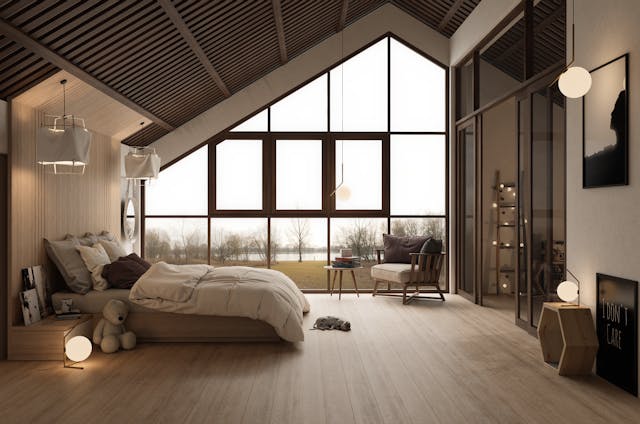
Why Warmth Starts With What You Touch, Not What You See
Many recommendations for changing the look of a bedroom suggest beginning with colors and inspiration boards. Not necessarily a bad idea, but choosing to focus on the room’s surfaces might be more effective. A cold room is uncomfortable because of the number of surfaces: how many flat, glossy, utterly inflexible ones they harbor. Improving this will make everything easier in the end.
Start With The Floor
Wooden floors may look aesthetically pleasing in photographs. However, the reality of it can be harsh especially in the early mornings. A rug is not considered a luxury but a necessity. Get an accent example which you can comfortably step on immediately after waking up. Opt for one with pile that’s high enough to provide adequate cushioning on your feet. Avoid those with low weaves since they will not serve the purpose. Furthermore, rug size should never be underestimated. If you purchase a small rug that merely covers a small section beside the bed, you will feel the difference; however, there was no need of getting it in the first place. Ensure you tuck it beneath the lower third of your bed frame. This way, your sleeping space will feel appropriately anchored towards something soft.
Replace The Ceiling Light
The quickest way to turn a bedroom into a waiting room is to depend on a single overhead light as your main source. The 3-light solution is simply to remove the main ceiling fixture as your primary and replace the function with a combination of bedside lamps, a floor lantern, and warm-toned LED strips run along a shelf or behind a headboard.
The key is to try and use indirect light sources, lights that shine onto surfaces instead of directly into your eyes. Warm-toned LED bulbs in the 2700K range have a nice bonus in that they make whites appear a little creamier and neutrals a bit more amber. Just that shift alone changes the perceived temperature of an entire room without needing to move a single stick of furniture.
The Bed As A Soft Anchor
The bed is the room’s focal point irrespective of whether you intend it to be or not. So the frame isn’t pure structure – it’s the material determinant for everything surrounding it. Metal and hard timber frames are clean and uncluttered but they feel cool. They echo sound slightly, they look mechanical, and there’s nothing given when sprawled up with a nighttime novel. An upholstered bed addresses all this. The padded back functions as a reclining chair, absorbs sound rather than reflecting it, and introduces cloth into the most dominant-looking piece of furniture. It’s a surface that you are engaged with, making the textile decision important rather than being purely decorative. Linen and boucle read solid and casual; velvet reads warmer and structured. Either is a better choice than a surface you would prefer not to touch.
75% of individuals report an increased night of sleep with a physically comfortable and appealing bedroom (National Sleep Foundation). That’s not surprising when you consider bedroom design beyond a visual exercise.
Layer Textiles With Intention
Tossing a billion throw pillows on a bed does not equal textural layering, it equals a mess. You want contrast between materials, not just more stuff.
Try a low pile linen duvet with a chunky knit throw folded at the bottom. Two or three pillows in a different fabric from your pillow cases. Velvet or wool are great materials because they feel distinct against your hand. A weighted blanket underneath the top layer adds physical warmth and a sense of pressure – when you’re looking to relax that’s invaluable. Run your hand across the bed. If everything feels the same, add something with a different texture. If it feels chaotic, remove the piece that adds nothing tactile.
Bring In Natural Materials
Nature-inspired design might seem like a cliché, but the feeling it inspires is simple. Bare, all-manmade rooms feel colder. A wooden side table, a ceramic lamp stand, a small plant – these all break up the sterility without any grand effort.
Natural colors pair well with natural elements, in the same way, because they’re speaking the same visual language. Terracotta, warm beige, ochre, olive – they all naturally gel. They make a room feel more in touch with the earth, and less of a presentation.
Scent is the least used of the senses in the design of a bedroom. A sandalwood or vanilla candle or diffuser will permeate the room with a warmth that goes beyond temperature. It sounds minor, but a warm-smelling room seems warmer for good reason.
Putting It Together
You don’t overhaul a room all at once. Start building the surfaces from the floor – rug, frame, bedding, lighting – and you’ll likely notice that each step makes the next one more obvious. The goal is not a styled photo. It’s a room that feels different at 10pm when you walk in and at 6am when you walk out. Warmth is tactile before it’s visual. Build the surfaces first, and the style follows.