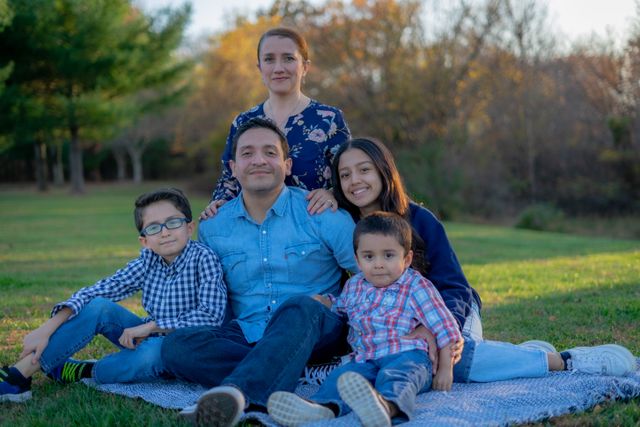
A family’s past can give children a personal connection to places, languages, and experiences beyond their own. Shared memories and everyday customs offer ways to explore those connections without a formal lesson. Care with facts, identity, and privacy helps that exploration lead toward a more thoughtful view of other people.
Our everyday habits already carry pieces of family history
Our children hear family history long before they see a family tree. It comes through a nickname, a greeting during a call, or the way someone explains a holiday. We can help them notice the people and choices behind these familiar things. That attention can make a distant place feel more connected to everyday life. It can also prompt questions we have never asked ourselves. Who first used that name? Why did a recipe change? Which parts of a story does each relative remember differently? We do not need to answer everything at once. Listening together gives us a place to begin.
As adults, we may explore inherited connections through DNA, old records, and conversations with relatives. Our children can take part through the stories and activities that suit their interests. Genetic clues can inform a search, but they cannot measure culture or decide how much someone belongs. The more useful lesson comes from how we handle what we find. We can check a claim without dismissing a memory. We can value a custom without making it a rule everyone must follow. We can also admit when information is missing and leave room for a different account. Raising globally aware kids involves carrying that care beyond our household. Family research offers practice in asking fair questions, noticing differences, and respecting another person’s privacy. Its value grows when our children become more interested in other lives, including lives with no known connection to ours. Our roots can encourage that wider curiosity.
A story about ordinary life gives children something to relate to
Dates matter in family research, but children may be more interested in what happened between them. Ask a relative about the journey to school, the people who lived nearby, or the task they dreaded doing. A child can compare these details with their own routine without assuming that every childhood should look alike. A short conversation with room for questions can be more enjoyable than a long interview.
Choose a starting point your child can examine: a photograph, an object, or a familiar phrase. Ask what they notice and which detail they want explained. Then follow that interest. If someone shares a story, ask before recording or copying personal material. Respect a request to avoid a subject or stop the conversation. Curiosity does not make painful or private memories available on demand.
Afterward, help your child preserve a small piece of what they learned. Write the speaker’s name, the date, and the subject beside the account. Keep a remembered detail separate from information checked against a document. When accounts differ, explain that people notice and recall different things; a record may help resolve some questions while leaving others open. Your child could add a caption to the photograph or locate the place discussed. Let the follow-up fit their interest rather than turning it into a test. The story becomes a connection they can revisit, with a source they can ask about again.
Customs feel closer when children can take part in them
Heritage does not need to become another scheduled activity. Look for small opportunities within things your family already does. Joining a conversation, helping with a meal, or choosing a song gives children a part to play. The aim is participation with context, so they learn whose practice they are sharing and why it matters.
-
Learn words that have someone waiting to hear them
The U.S. Census Bureau reported in June 2025 that 22% of U.S. residents age five and older spoke a language other than English at home during 2017–2021. Its tables covered more than 500 languages and language groups; 62% of people using another home language also spoke English “very well.” These figures describe that period, not language use today. Begin with a greeting or question your child wants to use during a family call, checking pronunciation with someone who knows the language.
-
Find out how a household recipe became its own version
Ask who taught someone to make a dish and what they changed along the way. Ingredients, cost, taste, and time can all shape a recipe, so describe it as one person’s version rather than a rule for an entire culture. Let your child help with a suitable task and save the story beside the instructions. The family connection stays visible even if a later generation adjusts the dish again.
-
Allow interest without requiring a performance
Children can join in at a comfortable pace, including when they are learning alongside you. Avoid asking them to demonstrate a phrase or custom for visitors if they do not want to. Make room for mistakes and questions, and explain unfamiliar meanings without demanding instant enthusiasm. A shared activity has more room to grow when children can enjoy it without having to prove their connection.
A family project should fit the child who is making it
Before drawing a tree, consider whether its format suits the relationships your child knows. Adoption, donor conception, absent relatives, and different caregiving arrangements can make standard charts too narrow. A family map or story collection may offer more room. You can distinguish biological connections from caregiving relationships without making one a measure of the other’s worth. Unknown information can remain unknown.
The Urban Institute found that 26% of U.S. children lived with at least one immigrant parent in 2022–23. The estimate covered children from birth through age 17 and used averaged survey data from those years. Most children in that group were born in the United States. The measure concerns parents’ birthplaces, rather than a child’s full ancestry, culture, or preferred identity.
Give your child room to make the project their own:
- Include the people who provide love, care, and continuity.
- Describe different kinds of family connection clearly.
- Leave uncertain details blank instead of filling them with guesses.
- Keep personal information out of classroom or public versions.
Ask which words your child finds comfortable when talking about their background. They may use several, or prefer a simple explanation for now. Avoid treating language skills, food choices, or knowledge of relatives as a belonging test. A child can have a strong family connection while knowing little about its history. Learning should give that connection more context, with room for their understanding to change.
Genetic information needs context before it becomes a label
A percentage on an ancestry map can look like a complete answer. Explain that an ethnicity estimate compares inherited patterns with reference groups; it does not measure culture or tell a person where they belong. Genetic ancestry concerns inherited connections. Culture includes learned customs and shared meanings, while citizenship concerns legal membership in a country. These can overlap, but they describe different things.
An adult considering genetic testing should decide what they hope to learn and review the service’s current terms. Consider matching, storage, sharing, and deletion choices, along with the possible effect of unexpected findings on relatives. Children can explore family history through conversations and records without providing a sample. Keep uncertain findings in adult research notes while considering how to explain them in a way that suits the child’s age and circumstances.
During family conversations, keep these boundaries clear:
- A result cannot rank the importance of family relationships.
- An estimate cannot explain how someone practices a culture.
- A possible match needs checking before becoming an established connection.
- Another person’s private information requires care and permission.
Avoid publishing children’s full names, birth dates, schools, or sensitive family details in public research spaces. Ask before sharing relatives’ messages or genetic information. You can be honest without announcing every untested possibility as soon as it appears. Taking time allows you to check the evidence and choose words carefully. Whatever a search reveals, children should understand that a test does not measure the care people give them or the security of their place in the family.
Curiosity becomes useful in the way children treat others
Knowing family roots can open a wider conversation, but respectful behavior still needs practice. Listen to how your child describes people outside the household. If they turn one person’s habit into a claim about a whole group, ask what supports the claim. Help them make it more accurate: “That is how our aunt celebrates” leaves room for other experiences.
Books offer a way to hear beyond the family circle. Choose authors from the backgrounds you explore, including stories about present-day life. Include friendships, work, school, and ordinary disagreements alongside festivals and history. One book will have a particular viewpoint, so compare it with other accounts where questions arise. Avoid expecting a classmate to explain an entire country or language. Children can share their experiences without becoming responsible for everyone else’s learning.
Practice actions that make respect concrete:
- Learn a person’s name and ask before shortening it.
- Respond to unfamiliar food without calling it strange or bad.
- Ask questions while accepting that someone may decline to answer.
- Speak up when a joke targets an accent or background.
Give your child words they can use, such as “That isn’t kind. Please stop.” If they make an unfair assumption themselves, explain the issue calmly and offer a better approach. Then leave room to try again. The goal is a child who can stay interested, accept correction, and listen when someone describes a life unlike their own. That is a meaningful way for family learning to reach beyond the family.
Let children have a voice in the story they carry forward
We can keep family history close without making our children responsible for preserving every custom or answering every question. Their interest may settle on a person, a place, or a small detail we barely noticed. Giving that interest room helps the story become something they can join.
After the next family conversation, invite our children to retell the part that stayed with them. We can check names or dates together while letting their questions guide the discussion. With permission, save their caption, drawing, or short recording beside the original account. Our children gain a voice in how the story continues. We gain a chance to hear what the past means to them, rather than deciding its meaning in advance.