Key Takeaways
- Choose a collecting category that matches your interests and available space.
- Read the full lot description and review all photographs before bidding.
- Check condition reports, repairs, missing parts, provenance, and functionality.
- Compare similar items and recent auction results when researching value.
- Calculate the full cost, including premiums, taxes, shipping, insurance, and repairs.
- Set a maximum hammer bid before the auction starts.
- Confirm online bidding, payment, pickup, shipping, and storage deadlines.
- Keep records and care for purchased antiques properly after the sale.
Buying antiques at auction can be an enjoyable way to find furniture, art, jewelry, books, ceramics, coins, and decorative objects with character. For first-time buyers, reviewing upcoming sales from Michaan’s Auctions and other established auction houses can also be a useful way to practice reading catalog descriptions, estimates, and condition details before placing a bid. The goal is not to win every attractive lot or chase the lowest possible price. A better approach is to buy objects that suit your interests, your available space, and your budget, which accounts for all costs associated with the purchase.
Why Auctions Appeal To New Collectors
Auctions make it possible to compare many kinds of objects in one sale, from paintings and silver to vintage design and historical memorabilia. They are also an education in how the market works. A catalog estimate is an auction house’s opinion of an expected selling range, while a starting bid is simply the opening bid. Neither figure guarantees the final price. Use early auctions as research opportunities. Watch how similar lots are described, note which details attract bidders, and compare the estimate with the hammer price. The hammer price is the winning bid announced before additional charges are added.
Choose A Collecting Category
A clear focus helps prevent impulse purchases and makes research much easier. You might begin with mid-century furniture, antique prints, vintage jewelry, coins, ceramics, glassware, textiles, rare books, or works on paper. Start with a category you genuinely enjoy learning about, rather than one chosen solely for potential resale value. Add one practical boundary to keep the search manageable. For example, decide that you will consider only objects under a certain size, within a fixed all-in budget, or from a particular period. Collecting with limits can make it easier to recognize the right item when it appears.
Research Auction Lots Before Bidding
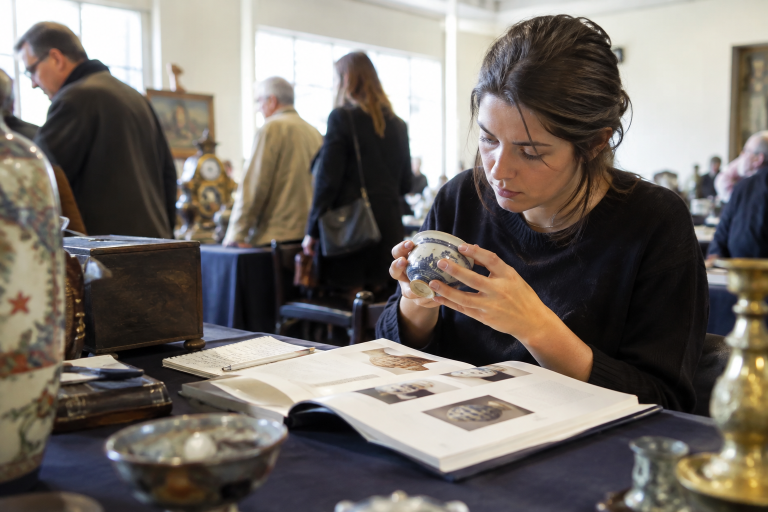
Do not rely on a quick photograph or an appealing title. Read the complete lot description, examine every image, and write down what the catalog does not answer. The guidance for examining a chosen lot before bidding is straightforward: allow enough time to review the item, description, estimate, and condition information.
- Identify the maker, materials, date or period, and dimensions.
- Review photographs for signatures, labels, marks, wear, and construction details.
- Compare the object with similar pieces that have sold previously.
- Ask about repairs, missing components, provenance, or functionality when relevant.
- Keep notes so that you can compare lots objectively.
Read Condition Reports With Care
Condition can affect both the value and the practicality of owning an object. Ask for a condition report when the catalog language or photographs leave important questions unanswered. Look for cracks, chips, dents, stains, odors, pest damage, loose joints, fading, missing pieces, and signs of earlier restoration. Some catalog wording needs careful interpretation. “Age-related wear” may refer to expected use over time, while “as found” can indicate that an item is offered without restoration. “In the manner of” generally describes resemblance to a maker or style rather than an attribution to that maker. If an item has electrical or mechanical parts, confirm whether they have been tested.
Calculate The True Cost
The winning bid is rarely the complete cost. Before bidding, review the sale terms and calculate the likely total:
Final Cost = Winning Bid + Buyer’s Premium + Applicable Taxes + Shipping or Pickup + Insurance + Restoration
A Simple Example
If you win a lot at $200, a buyer’s premium, tax, packing, delivery, and a needed repair can raise the total substantially. Set your limit to the full amount you are comfortable spending, not the number you hope to bid in the moment. Fees, payment requirements, pickup rules, and storage charges vary by sale, so read the conditions before registering.
Set an A Bidding Plan
- Choose your maximum all-in spending amount.
- Subtract estimated premiums, taxes, delivery, and possible repairs.
- Write down the resulting maximum hammer bid.
- Decide in advance whether a higher price would still make sense.
- Stop bidding when your limit is reached.
Absentee bids, live room bidding, telephone bids, and online bids can all work well. The best method is the one that lets you follow the sale clearly and stay within the limit you established before excitement enters the process.
Bid Online With Confidence
Online sales offer convenience, but they require preparation. Confirm the sale’s closing time and time zone, complete registration early, and check whether the auction uses extended bidding. Save the lot description and images for your records, then review the payment process, pickup window, shipping options, and deadlines. Photographs can make it difficult to judge scale, texture, surface wear, or structural condition. Whenever possible, inspect the item in person or request additional photographs. Measure your intended display area before purchasing large furniture, framed art, or fragile decorative pieces.
Avoid Common First-Time Mistakes
- Confusing an estimate with a guaranteed value or bargain.
- Ignoring the buyer’s premium, tax, shipping, or storage charges.
- Assuming that age alone makes an object rare or valuable.
- Skipping condition research because the object looks good in photos.
- Buying furniture or art without measuring the destination space.
- Reacting to competition by raising a bid beyond the original plan.
New collectors often make better choices when they buy what they enjoy and take time to learn the category. A practical guide to antiquing and collecting likewise emphasizes research, careful inspection, and the selection of pieces with personal appeal.
Plan For Pickup, Shipping, And Care
Logistics begin before the bid. Confirm packed dimensions, approximate weight, collection deadlines, and whether the auction house provides shipping or requires you to arrange it. Photograph the item as soon as it arrives and retain invoices, catalog pages, condition reports, receipts, and any provenance notes. Protect sensitive materials with simple habits. Keep paper, textiles, and photographs away from direct sunlight. Avoid harsh cleaners on unknown finishes, and maintain a stable indoor environment for wood and other vulnerable materials: good records and careful storage support future insurance, resale, donation, or estate planning.
Build Knowledge Before Building A Collection
Successful auction buying is less about finding an instant bargain and more about building dependable habits. Research thoroughly, inspect the condition, calculate the real cost, set a firm limit, and plan for transport before you bid. With patience and clear records, buying antiques at auction can become a rewarding long-term collecting hobby.
Conclusion
Buying antiques at auction becomes easier when collectors focus on research, planning, and practical ownership needs. Choosing a category that matches personal interests, reviewing complete lot descriptions, checking condition, and researching comparable sales can help buyers understand what they are considering before bidding. It is also important to calculate the total cost beyond the hammer price, including applicable fees, taxes, shipping, insurance, and potential repairs. Setting a maximum bid in advance can help keep purchases within a realistic budget. New collectors should also plan for pickup, storage, and ongoing care after the sale. By building knowledge gradually, keeping organized records, and taking time to ask questions when details are unclear, buyers can approach antique auctions more prepared and make purchases that fit their interests, space, and long-term collecting goals.